

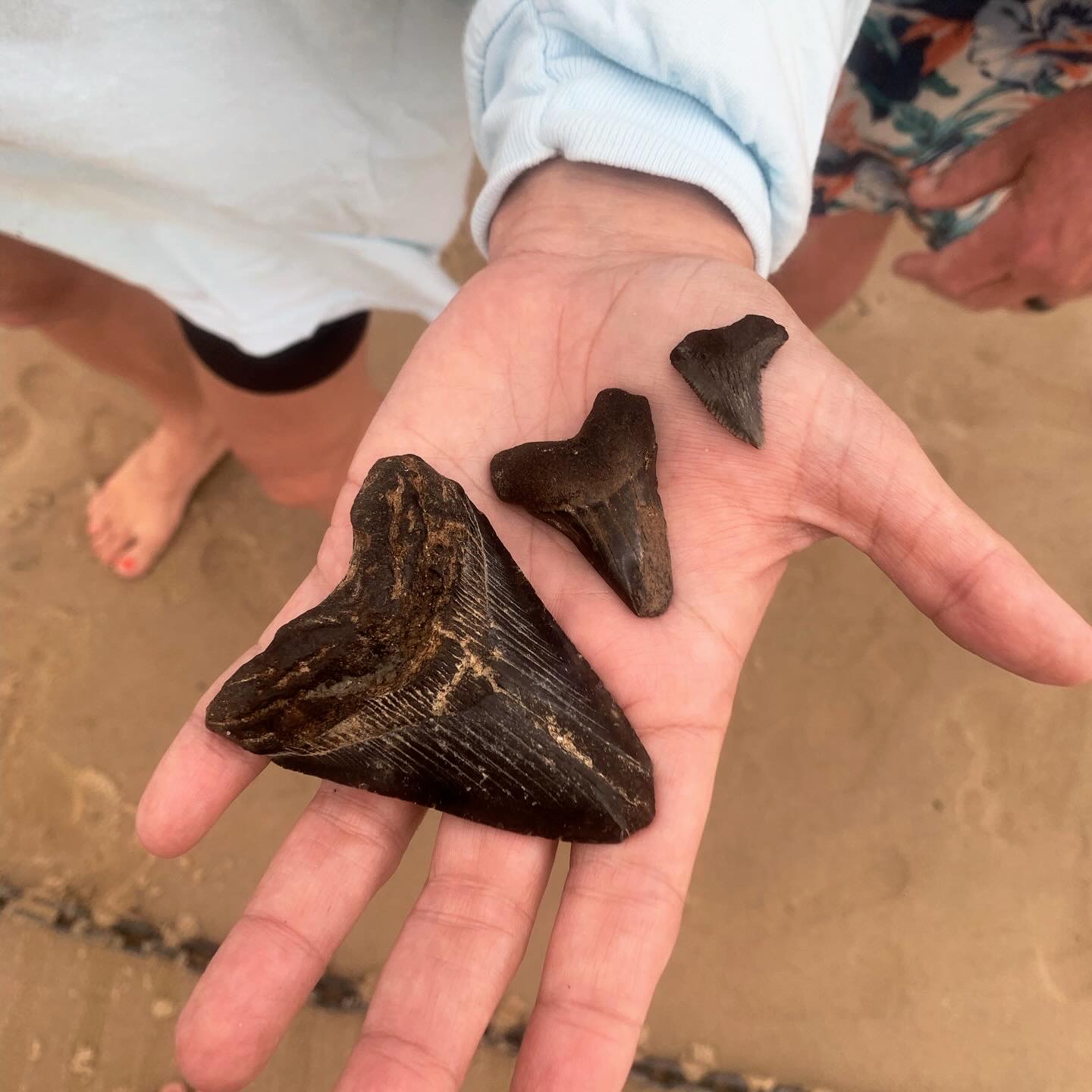
If you’ve ever wanted to hunt for prehistoric shark teeth while standing on a quiet sandbar, Shark Tooth Island Wilmington NC is basically your Jurassic Park moment, minus the velociraptors and with considerably better sunscreen options.
Tucked into the Cape Fear River near Wilmington, North Carolina, Shark Tooth Island is one of the best places on the East Coast to find fossilized shark teeth that are millions of years old. And yes—contrary to what your skeptical friend says—you actually can find them.
Let’s break down what Shark Tooth Island is, how to get there, whether you should paddle or take a boat, and how to walk away with your very own prehistoric souvenir.
What Is Shark Tooth Island?
Shark Tooth Island (sometimes called Sharks Tooth Island or Fossil Island) sits in the Cape Fear River between Carolina Beach and Wilmington. It’s part of a cluster of dredge‑spoil islands — including Keg Island and several smaller “dot islands” — that have been created and reshaped over decades as the river is dredged for navigation. Because the dredged material comes from deep, fossil‑rich sediment layers, these islands are loaded with ancient marine deposits.
Once the material is placed, the river does the rest. Constant tidal movement acts like a natural sifter, washing away lighter sand and leaving behind heavier fossils. Over time, the river also erodes into Miocene and Pliocene layers (roughly 5–20 million years old), continually exposing new shark teeth, ray plates, whale bone fragments, and other prehistoric finds. Every tide rearranges the sand — which is why no two visits ever look the same.
Every tide and storm uncovers new material, including:
- Fossilized shark teeth
- Whale bone fragments
- Ray teeth
- Fossil shells
- Occasionally very cool mystery bones that make you feel briefly like a paleontologist
The teeth come from prehistoric sharks that once swam in the warm seas that covered this region millions of years ago. In other words: you’re literally picking up pieces of ancient ocean predators.
Not bad for a Saturday afternoon.
Will You Actually Find Shark Teeth?
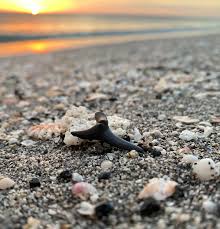
Short answer: It’s very likely. The trick is knowing where to look—which we’ll get to shortly. Our group, which included military Veterans and service members, were able to find many!
How to Get to Shark Tooth Island
Here’s the first important thing: you cannot drive to the island. It sits in the middle of the Cape Fear River, so you need a boat, kayak, or a guided tour to reach it.
Option 1: Paddle a Paddleboard, Kayak, or Canoe
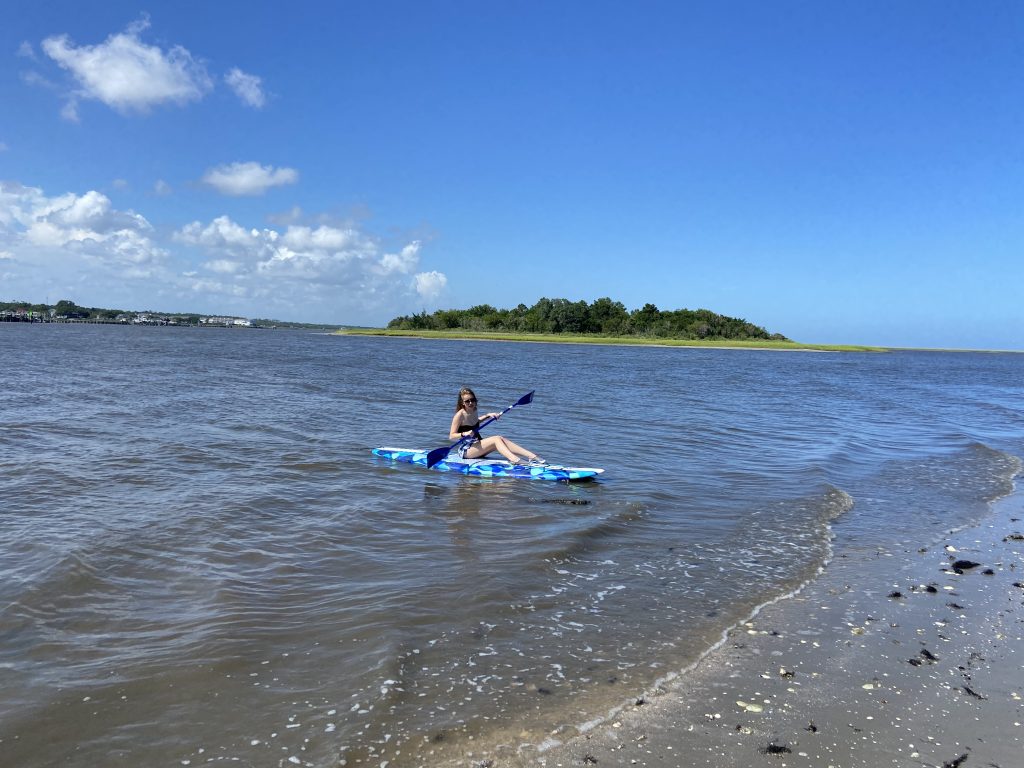
If you like a little adventure (and maybe a good arm workout), paddling to Shark Tooth Island is a popular option. Most people launch from nearby boat ramps or arrange a kayak rental with a shuttle.
Pros:
- Quiet and scenic
- Cheaper than a tour
- You can explore at your own pace
- Wildlife sightings (osprey, etc.)
Cons:
- The Cape Fear River has strong currents
- Wind can make the paddle tougher
- Not ideal for very young kids
- Rare, but we have seen gators in the river!
If you’re comfortable kayaking and check the tides, it’s a fun mini-expedition.
Option 2: Take a Boat
If you prefer relaxation over paddling cardio, take a guided boat tour.
Local tour operators run short trips that include:
- Boat ride to the island
- Fossil hunting time
- Tips on finding shark teeth
- Sometimes fossil identification
Pros:
- No paddling required
- Great for kids
- Guides know the best spots
- Safer if you’re unfamiliar with the river
Cons:
- Costs more than DIY
- Limited time on the island
For families or first-timers, this is often the best option.
Want to Paddle? Plan on About 20 Minutes
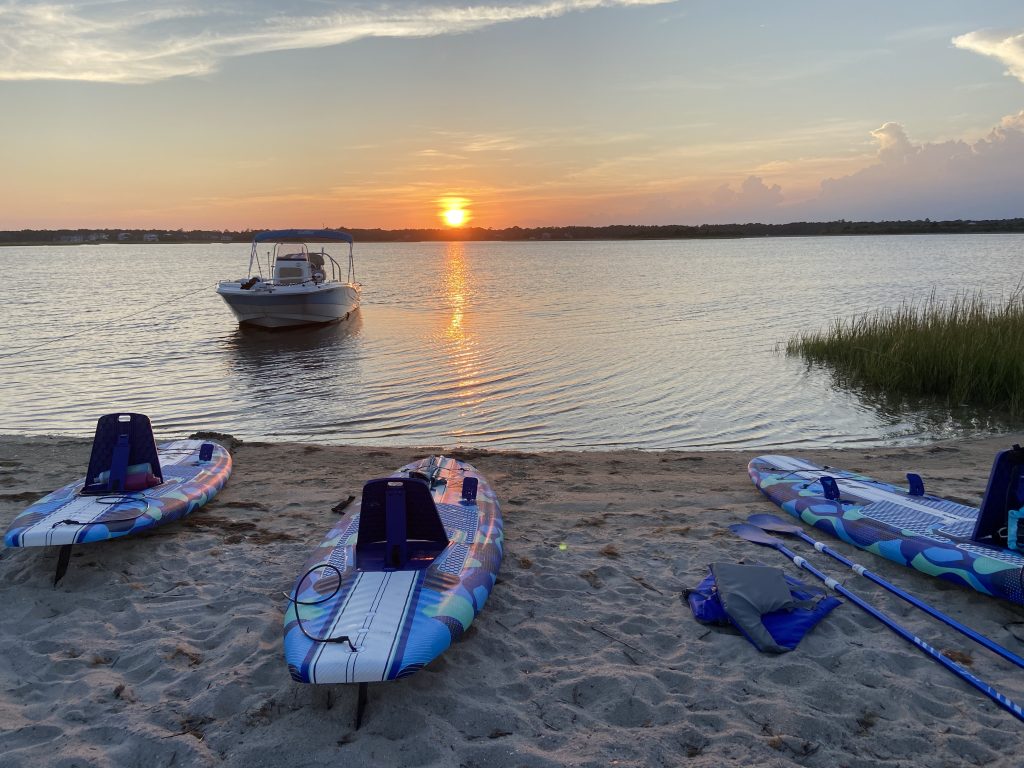
We went with the standup paddle board option and launched from River Road Park, which is hands‑down the best insider launch spot. It’s a sandy, protected put‑in with easy access to the quiet channel that leads toward the island. The current grabbed our kayaks immediately — not dangerously, but enough to remind you that the Cape Fear River has opinions.
The paddle across took about 20 minutes in calm conditions. The currents were manageable, especially if you time your paddle around slack or falling tide. Once you cross the channel, the islands appear like a maze of sandy humps and driftwood — and you can hop between them depending on the tide. It feels like a mini‑expedition: quiet water, ospreys overhead, and the occasional mullet jumping like it’s late for something.
The Best Time to Visit Shark Tooth Island
The best time is low tide or falling tide, when the sandbars are exposed and fresh fossils appear.
Local fossil hunters also swear by:
Spring and fall for cooler temps
Visiting after storms (new material gets uncovered)
Early mornings for fewer people
Summer and early Fall are great times to explore Shark’s Tooth Island — just bring water and sunscreen. North Carolina humidity is not shy.
How to Find Shark Teeth
Finding shark teeth is less like treasure hunting and more like training your brain to see triangles.
Here’s the method locals use.
Look for Black Triangles
Most fossil shark teeth are black or dark gray, which contrasts with the tan sand. Your brain eventually learns to scan for tiny triangular shapes.
Check the Shell Piles
Where shells and gravel collect, fossils collect too. These little “deposit zones” often hide the best finds.
Use the Sun
Stand with the sun behind you so the teeth reflect light slightly. It’s weirdly effective.
Sit and Sift
The patient fossil hunters sit down and slowly sift handfuls of shell and sand. It’s oddly relaxing, and also addictive.
Local’s Tip: Where to Launch and What to Bring
⭐ River Road Park — Best Launch Spot
This is the local favorite. It’s calm, protected, and puts you right into the channel that leads to the islands. Other launch options exist, but River Road Park is the easiest and safest for beginners.
A few things seasoned fossil hunters bring:
- Mesh bag or container for teeth
- Small shovel or scoop
- Water shoes (shells can be sharp)
- Sunscreen
- Hat
- Lots of drinking water
Kayak Rentals, Tours & Boat Options
Here are reputable local providers (all operating in the Wilmington/Carolina Beach area):
Kayak Rentals & Self‑Guided Options
- Wrightsville Beach Kayak Co. — Offers kayaks, paddleboards, maps, sifters, and self‑guided Shark Tooth Island trips.
- Masonboro Paddle Co. — Provide kayaks with delivery, pickup, and orientation for Shark Tooth Island paddles.
- Kayak Carolina — Beginner‑friendly guided tours to Shark Tooth Island, Keg Island, and surrounding sandbars.
- Wilmington Outdoor Adventures — Small‑group guided kayak tours with gear included.
Boat Tours & Charters
- Local charter captains and eco‑tour operators run short fossil‑hunting boat trips.
- Many Carolina Beach and Wilmington outfitters offer private charters that can include Shark Tooth Island stops.
Final Verdict: Is Shark Tooth Island Worth Visiting?
Absolutely.
It’s one of the most unique outdoor adventures near Wilmington, and unlike most tourist activities, you actually get to take home something ancient and real.
Even if you only find a tiny tooth the size of a grain of rice. Which, somehow, still feels like winning.