
How to Increase Your Odds of Not Getting Stranded
You can memorize every Space‑A rule, regulation, and obscure footnote ever written and still have no idea how to actually succeed at flying Space‑A. That’s where strategy — and a little bit of chaos tolerance — comes in. You’ll learn plenty through trial and error, but here are seven hard‑earned tips from years of hopping around the world on military aircraft like two budget‑loving nomads. If you’re brand new to Space‑A, start with the step‑by‑step guide. Then come back for the real talk.1. Give Yourself as Many Options as Humanly Possible
Depending on where you live, you may have multiple bases you can fly from. Use them. All of them. Even the ones that seem inconvenient. Especially those. When we lived in the Norfolk area and wanted to get to Europe, we stalked flights from: JB Andrews Dover AFB BWI Naval Station Norfolk Charleston And even JB McGuire‑Dix‑Lakehurst (because why not) If you don’t live near a base with regular flights to your dream destination, consider getting yourself to a region that does — like DC, which is basically Space‑A Disneyland. Flights within the continental U.S. are usually less competitive, so you can often hop your way to a major hub even if it’s not where you ultimately want to go. Think of it as “connecting flights,” but with more unpredictability and fewer pretzels.2. Monitor Space‑A Flight Schedules Like It’s Your Side Hustle
I follow a bunch of terminal pages so I can get familiar with their patterns. Do I check them every day? Absolutely not. But when we’re planning a trip, I zero in on the bases we might use. Before our 2019 Japan‑to‑Europe adventure, I monitored: Yokota AB Osan AB Kadena AB Travis AFB JB Lewis‑McChord JB Elmendorf‑Richardson JB Pearl Harbor‑Hickam Andersen AFBBasically, if it had a runway and a Facebook page, I was watching it.
This helps you understand:- How often flights go where
- How many seats they release
- How many Cat 6 passengers actually get on
It’s like weather forecasting, but for aircraft you hope will take you somewhere.
3. Pack for Flexibility (a.k.a. Pack Like a Minimalist… or at Least Try)
Yes, most Space‑A flights allow two 70‑lb checked bags. No, you should not bring them unless you enjoy limiting your options. Sometimes a flight has open seats but can’t take more checked bags due to cargo weight. Guess who gets on? The people with carry‑ons. Also, some aircraft have weight limits as low as 25–30 lbs per person. If your bag weighs more than a toddler, you’re out. Packing for flexibility also means bringing the gear you need to survive a cargo flight — layers, snacks, earplugs, and the emotional resilience of a seasoned traveler.4. Consider Avoiding the Busiest Space‑A Locations
Just because a terminal is popular doesn’t mean it’s your best bet. Example: Everyone and their cousin tries to route through Hawaii when flying to/from the Pacific. JB Pearl Harbor‑Hickam is a major hub, which means tons of competition — especially from active‑duty spouses traveling with kids (Cat 4 and 5). If you’re a lower‑priority category, you may get stuck. Meanwhile, JB Elmendorf‑Richardson in Alaska is over there like, “We have seats. Anyone? Hello?” Sometimes the best move is the weird move.5. Take the First Thing Smokin’
Do. Not. Wait. For. The. Perfect. Flight. If a flight is leaving today and another might leave tomorrow, take the one today. Space‑A schedules are suggestions, not promises. Example: You’re at Ramstein trying to get to Dover. There’s a Dover flight tomorrow with TBD seats. Today, there’s a flight to Westover ARB in Massachusetts with 10 seats. Do you know where Chicopee, MA is? Probably not. Should you go anyway? Absolutely. Once you’re across the Atlantic, you have options. Staying in Germany hoping for a miracle? Not so much. We used this strategy leaving Hawaii. When two Travis flights vanished from the schedule, we grabbed a rare hop to Selfridge ANGB in Michigan. Did it make sense? Not really. Did it work? Yes — because we also used strategy #7.6. Expect Last‑Minute Changes (Because They Will Happen)
If you’re competing for a flight within 24 hours, call the terminal regularly. Roll Call times change. Seat counts change. Baggage limits change. Everything changes. Space‑A is basically: Rush to the terminal Wait five hours Get told there’s a delay Suddenly hear “Boarding in 30 minutes!” Or “Come back tomorrow!” Terminal staff will sometimes give you hints about whether it’s safe to leave, but often it’s your call. Choose wisely.7. Have a Plan B, C, and D (and Maybe E)
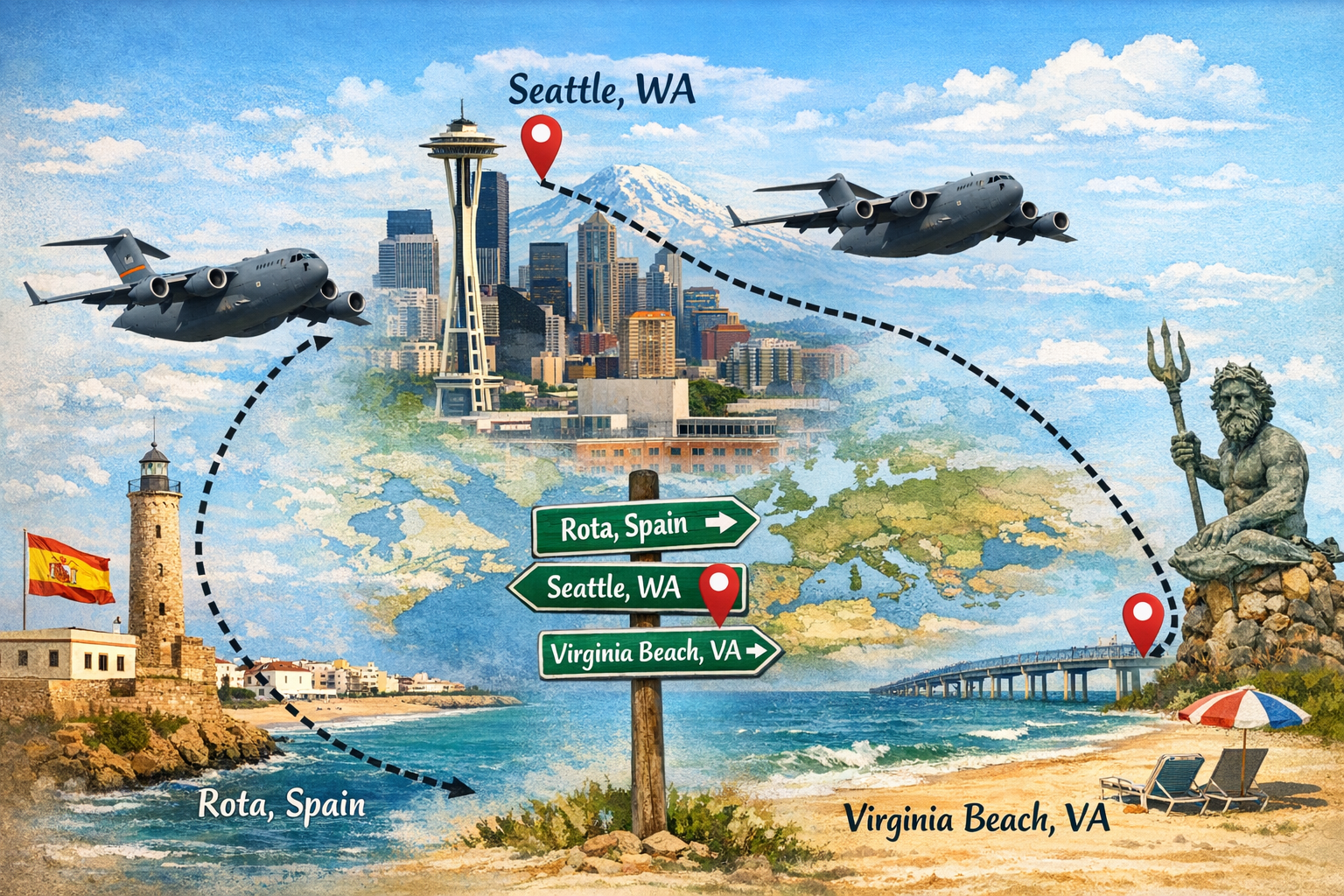
Space‑A is unpredictable. You need backup plans for your backup plans. Options include: Waiting it out (if you have time and money for lodging) Hopping to another base with better flights Turning your unintended destination into a spontaneous vacation Flying commercial (always price this out ahead of time) Combining Space‑A + commercial Example: After hopping from Rota to McCord, we drove to Whidbey and caught a Det flight to Oceana. Even with hotel + airfare for 5, we saved over $2,700 compared to flying commercial from Spain to Virginia. Space‑A doesn’t have to get you all the way there to save you money. Get creative.✈️ Ready for Your Next Military Hop?
Learning the rules is important, but strategy is what actually gets you on the aircraft. Keep these tips in mind before, during, and after your trip — and most importantly, enjoy the adventure. Space‑A is unpredictable, ridiculous, and occasionally magical, which is exactly why we love it.The appearance of any Department of Defense entities, images, or testimonies, on this or subsequent pages or links to pages does not convey or imply that the Department of Defense directly or indirectly endorses any product or service provided, or to be provided, by SpaceATravels.com, its successors, assignees, or licensees.
The appearance of hyperlinks to Department of Defense commands, units, and or activities, does not constitute the endorsement by the Department of Defense, the U.S. Army, the U.S. Navy, the U.S. Air Force, the U.S. Marine Corps, etc. of this website or the information, products or services contained therein. The Department of Defense, the U.S. Army, the U.S. Navy, the U.S. Air Force, the U.S. Marine Corps, etc. does not exercise any editorial control over the information you may find on this website or the provided hyperlinks. Such information and links are provided consistent with the stated purpose of the SpaceATravels.com website.