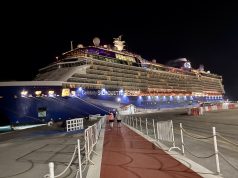

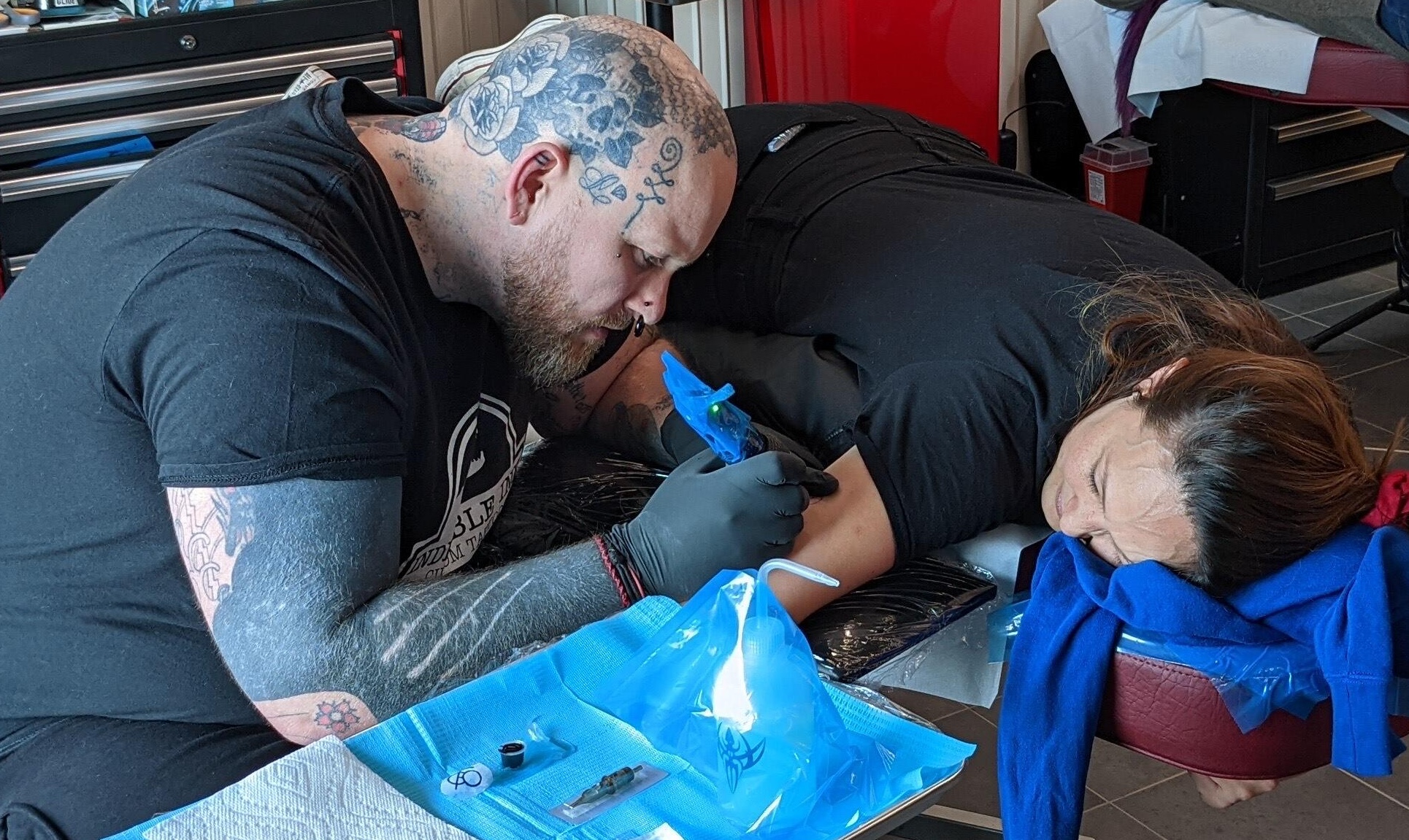
Can you get a tattoo on a cruise ship? The answer may surprise you…
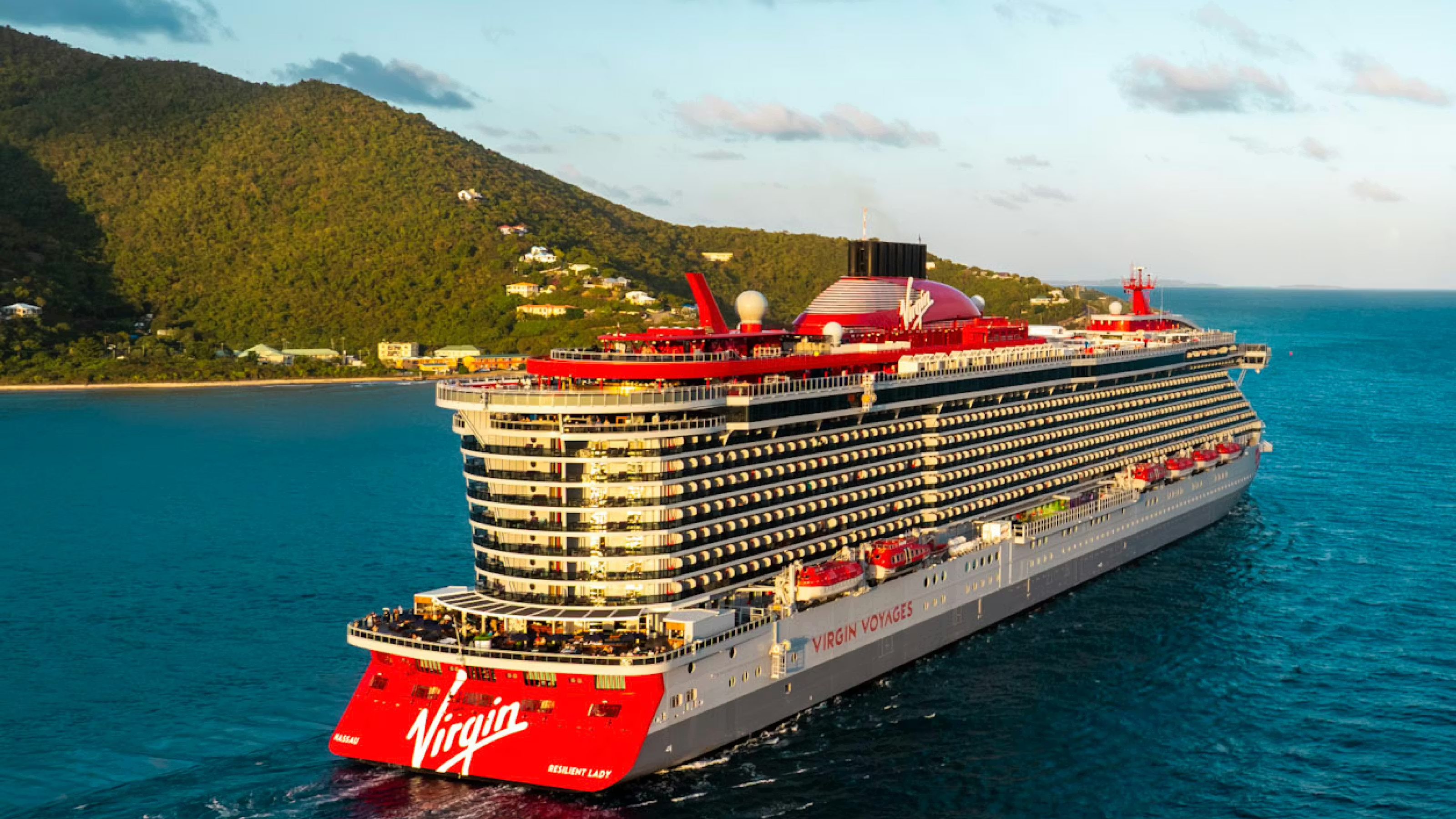
Somewhere in the middle of the Caribbean, with the horizon stretching out like a lazy watercolor and a margarita sweating on the bar behind you, someone is getting tattooed. Not in a Brooklyn studio with exposed brick and a barista. No. This tattoo is happening on a cruise ship. Specifically, aboard the sleek, adults-only ships of Virgin Voyages, where tucked inside a polished corner of the vessel is something that would make old-school sailors smile: a legitimate tattoo parlor at sea.
It’s called Squid Ink. And depending on who you ask, it’s either a brilliant piece of travel theater, or the most permanent souvenir you’ll ever bring home from vacation. This is the strange, fascinating world of getting tattooed in international waters.
A Tattoo Parlor in the Middle of the Ocean
Virgin Voyages did something unusual when it launched its first ship, Scarlet Lady, in 2021. Instead of leaning fully into the cruise clichés —shuffleboard courts and soft-serve ice cream machines—they decided to embrace the long, slightly rebellious history between sailors and tattoos.
The result was Squid Ink, the first permanent tattoo studio on a major cruise ship.
Virgin partnered with the tattoo collective World Famous Ink to staff the shop with rotating professional artists who typically do guest residencies lasting two to four weeks. Many are working artists from established studios who spend part of their year traveling the tattoo convention circuit before boarding the ship. In other words, these are not cruise-ship entertainers who learned to tattoo between karaoke sets. They are legitimate professionals.
Virgin describes the concept simply:
“Squid Ink offers Sailors the chance to get tattooed by world-class artists while sailing the high seas.”
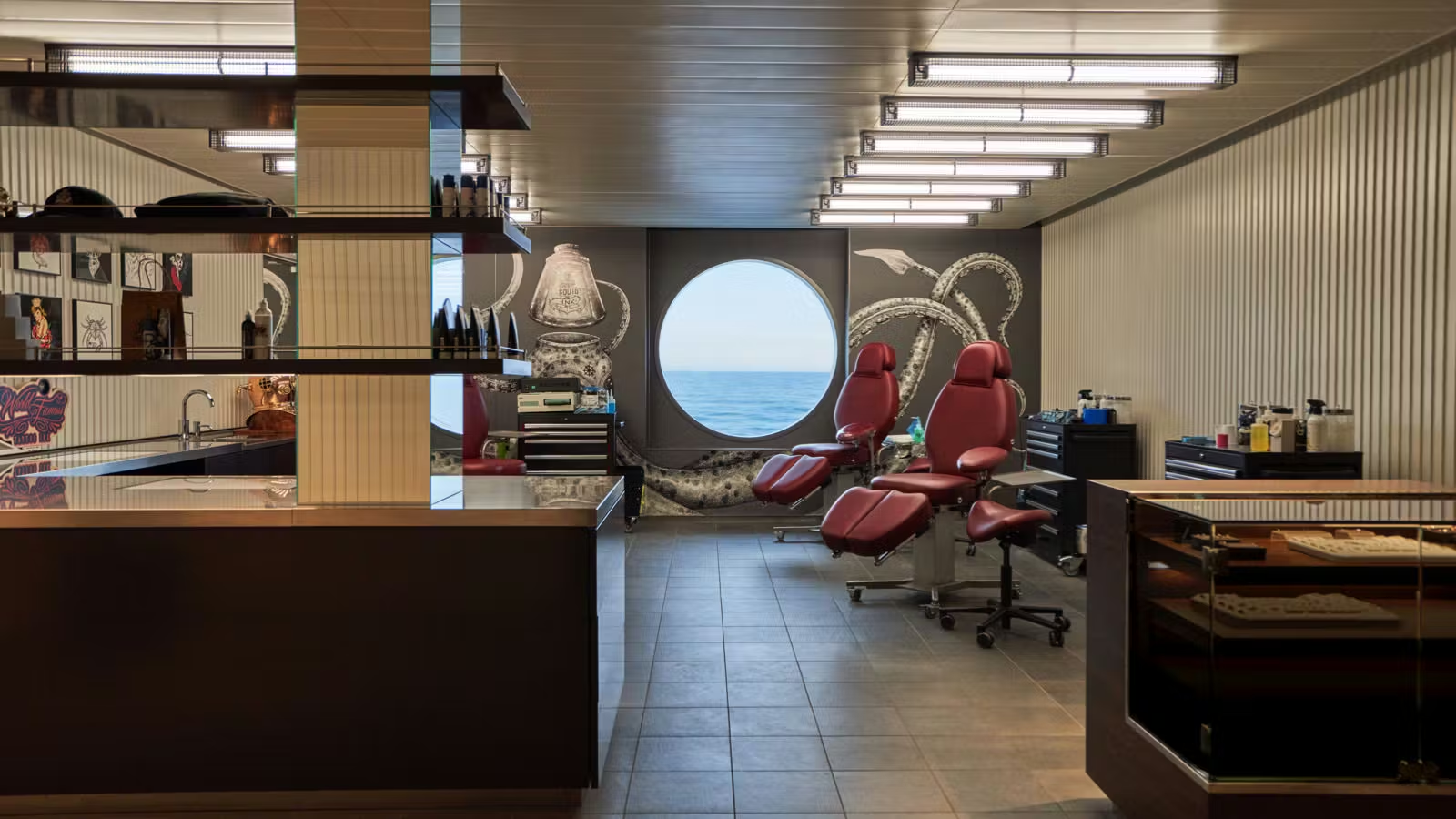
The shop itself looks more boutique than novelty attraction. Stainless steel workstations. Professional sterilization equipment. Framed flash sheets lining the walls like art prints. If you stumbled into it on land, you’d assume it was a trendy studio in Miami. Except outside the window is the Atlantic Ocean.
The Ancient Tradition of Sailors and Tattoos
Of course, tattoos at sea are hardly new. Long before cruise ships began installing tattoo parlors between champagne bars and Korean barbecue restaurants, sailors were marking their skin as proof of where they’d been. The practice dates back centuries. Western sailors adopted tattooing after encountering Polynesian cultures in the 1700s. The English word “tattoo” itself comes from the Polynesian word tatau.
One of the most famous early adopters was Captain James Cook, whose voyages in the South Pacific exposed European sailors to the elaborate tattoo traditions of Tahiti and Samoa. Crew members returned home with permanent souvenirs—and a new maritime tradition. For the next two centuries, tattoos became the unofficial passport of sailors.
A swallow meant you’d sailed 5,000 nautical miles.
A turtle meant you’d crossed the equator.
A pig and rooster on the feet were thought to prevent drowning.
Today the symbols have changed. Instead of swallows and anchors, cruise passengers might choose minimalist line art, delicate florals, or a geometric wave. But the impulse is exactly the same.
A tattoo that says: I was here.
The First Question Everyone Asks: Is It Safe to get a Tattoo on a Cruise Ship?
Let’s address the obvious concern. Tattooing requires precision. Needles puncture skin thousands of times per minute. The lines are permanent. And cruise ships — contrary to what glossy brochures suggest — do move. So does that mean your tattoo could end up looking like it was drawn during an earthquake? Probably not.
Modern cruise ships are enormous floating cities. The Scarlet Lady alone is over 900 feet long and weighs more than 110,000 tons. Thanks to sophisticated stabilizers and careful engineering, the movement most passengers feel is surprisingly minimal. Tattoo shops aboard Virgin ships are located midship on lower decks, which is the most stable part of the vessel. Naval engineers design ships so that motion is reduced near the center of gravity.
Professional tattoo artists are also accustomed to unpredictable movement—because clients move constantly. Anyone who has tattooed hundreds of people has dealt with coughing, sneezing, twitching, or someone suddenly deciding to check their phone mid-line. Compared to that, a slight ocean swell is relatively manageable. Still, there are limits. If a ship encounters serious weather or other emergencies, appointments can be postponed. The ocean, after all, always gets the final word.
The Artists: Traveling Tattooists of the High Seas
A bigger concern for many first-timers isn’t the ship — it’s the artist. Tattoo styles vary wildly. Traditional American. Japanese. Fine-line blackwork. Photorealistic portraiture. Watercolor. A brilliant traditional tattoo artist might struggle to produce delicate realism.
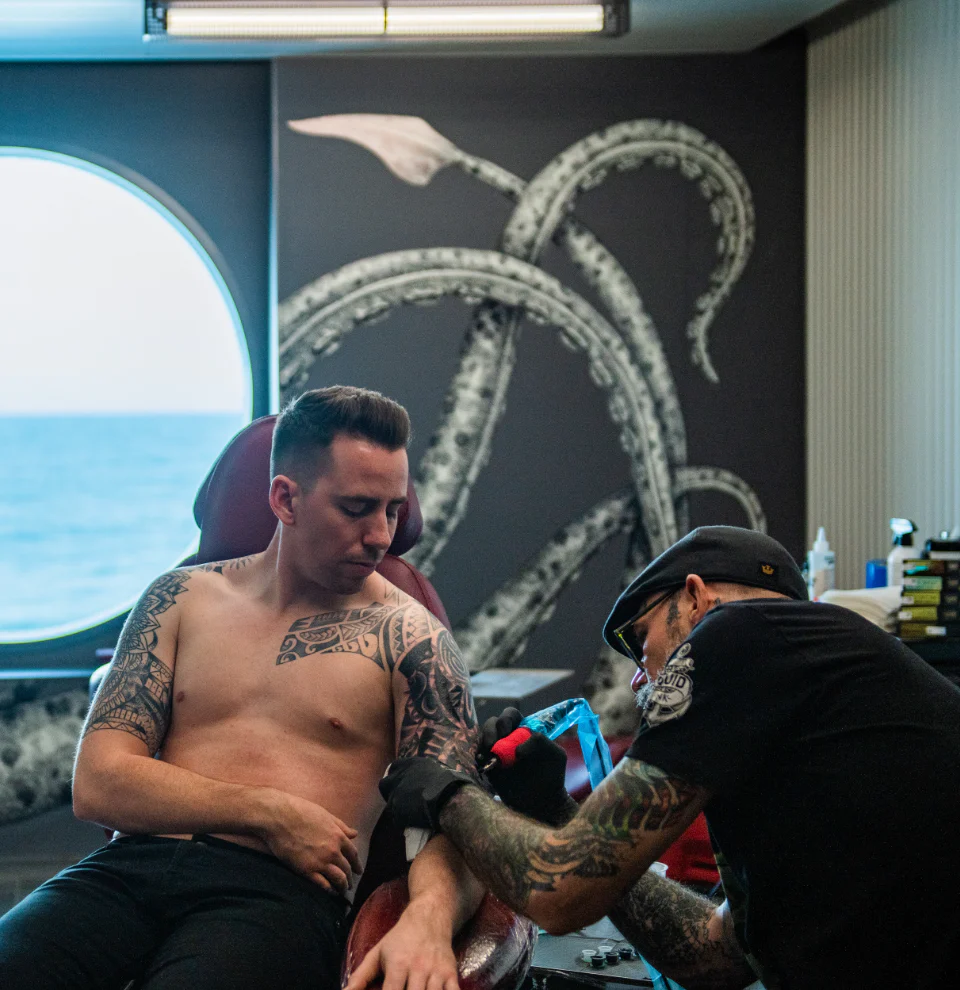
Virgin addresses this by rotating artists frequently through the Squid Ink studio. Many have established shops on land and maintain professional portfolios. Before booking, passengers are encouraged to review artists’ work on Instagram or in person. The studio typically posts upcoming artists through the Virgin Voyages social channels and Squid Ink’s own profiles. This matters because tattoos are deeply stylistic. You wouldn’t ask a jazz saxophonist to suddenly perform opera. Likewise, you probably shouldn’t ask a bold traditional artist to produce hyper-detailed realism. The safest route, especially for a first tattoo, is to choose something aligned with the artist’s existing work.
Why Most Cruise Lines Haven’t Followed
Tattooing at sea sounds romantic, but it presents logistical challenges. Cruise ships operate under strict health regulations. Any activity involving needles, blood, or invasive procedures must comply with international sanitation rules and maritime health standards. And running a tattoo studio requires licensed artists, sterilization equipment, biohazard disposal systems, and strict infection-control protocols.
For cruise lines focused on family travel, the potential legal and regulatory headaches may outweigh the novelty. Virgin Voyages, with its adults-only model and more rebellious brand identity, was simply better positioned to try it. They’re basically saying, this is not your grandparents’ cruise.
Will other cruise lines eventually follow?
Possibly. Tattoo culture has become mainstream. Nearly one-third of Americans now have at least one tattoo, according to surveys from the Pew Research Center. And cruise lines are always looking for the next Instagram-friendly experience that makes passengers say: Wait, you can do that on a ship?
Remember: A roller coaster was once unimaginable at sea. Now it exists and nobody thinks twice.
The Reality of Tattoo Prices at Sea
Let’s talk about money.
Tattoo prices on Virgin Voyages tend to be higher than in many land-based shops. Small flash tattoos often start around $200 to $250, with larger or custom pieces climbing quickly from there. On land, a small tattoo might cost anywhere from $80 to $150 depending on location.
Why the difference? Partly logistics. Flying artists onto a cruise ship for a residency, housing them, and equipping a sterile studio in the middle of the ocean is not cheap. You are also paying for the novelty factor — the story.
The Real Risk: Not the Tattoo, But the Water
If there’s a legitimate downside to getting tattooed on a cruise, it’s not the ship’s movement. It’s the pool.
Fresh tattoos are essentially open wounds. For proper healing, artists generally recommend avoiding submerging them in pools, hot tubs, or ocean water for two to four weeks. Sun exposure is also a problem. Sunscreen should not be applied to a fresh tattoo until it has healed. This is inconvenient on a cruise, where the entire experience revolves around swimming, beaches, and sunshine.
Many experienced travelers recommend scheduling the tattoo on the final night of the voyage. By then, the snorkeling and pool lounging are finished anyway. You wake up the next morning with a new tattoo and a flight home. Vacation complete.
The Miracle Bandage: Second Skin
Virgin Voyages tattoo artists typically use modern healing bandages like Derm Shield or other “second skin” products. These transparent adhesive films seal the tattoo beneath a sterile barrier while allowing oxygen exchange. They are waterproof enough to survive showers and daily activity, though most artists still recommend avoiding long soaking sessions. The bandage is usually worn for several days and replaced if necessary. It’s one of the reasons cruise tattoos have become more practical than they once were. Twenty years ago, you would have been wrapping your arm in plastic wrap and hoping for the best. Today, the healing process is significantly more controlled.
The Strange Psychology of Vacation Tattoos
Why do people get tattoos on cruises at all?
Part of the answer lies in the peculiar psychology of travel. Vacation suspends the rules of ordinary life. You drink margaritas at noon. You dance with strangers. You order a second dessert because no one is watching. Travel researchers call this liminality — the temporary state between your normal identity and a freer version of yourself. In that environment, the idea of permanently marking the experience suddenly feels logical. So, whether you get a palm tree, a wave, a starfish or a shark’s tooth, the tattoo becomes proof that the experiences mattered. Not just a photograph. It’s a story written in skin.
Tattoos People Actually Get at Sea
Cruise ship tattoos tend to be small, intentional, and symbolic, less about spectacle and more about memory. Travelers are not arriving with multi-session plans for elaborate sleeves. They’re arriving with ideas sparked somewhere between a beach excursion and the second glass of rosé at sunset.
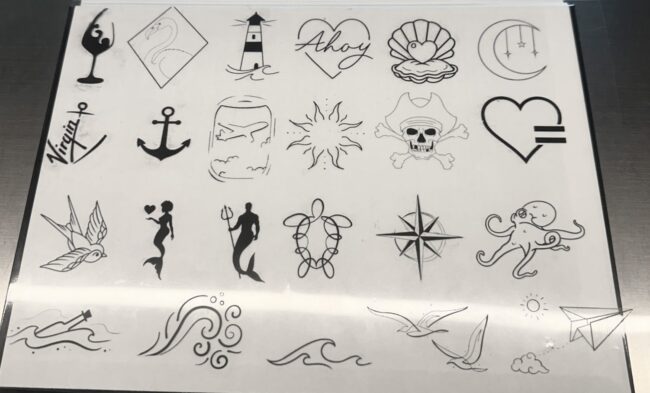
Minimalist designs dominate. A tiny wave on the wrist. A compass rose behind the ankle. A delicate outline of a swallow, echoing the centuries-old sailor tradition. Sometimes it’s simply the coordinates of a place that mattered — a honeymoon island, the latitude of the Caribbean, the exact spot where someone decided life might be more interesting if they loosened the rules a little.
- Artists working with Virgin Voyages say nautical imagery reigns supreme. Waves, compasses, and ships appear again and again. But the style is far more contemporary than the bold, thick-lined tattoos sailors once favored.
- Travel coordinates are particularly popular. It’s a modern twist on maritime tattoos: instead of an anchor marking safe harbor, travelers choose the numbers that describe a place where something shifted inside them.
- Constellations appear frequently, especially the ones visible from the ship’s deck at night when the ocean turns black and the stars suddenly feel very close. A few travelers choose shells or sea creatures encountered during snorkeling excursions earlier that day.
The Flight Home Problem
Another practical concern: the journey back.
If you get tattooed on the final night of a cruise and then spend the next day navigating airports and long flights, is that a problem? Generally speaking, no. Modern second-skin bandages are designed to stay in place for several days, protecting the tattoo from friction and bacteria. You may feel some mild swelling or sensitivity, but normal travel activities — walking through airports, sitting on airplanes — are typically fine. The bigger challenge is resisting the urge to touch the tattoo.
What First-Timers Should Know
If you’re considering your first tattoo aboard a cruise ship, a few pieces of advice emerge consistently from experienced tattoo enthusiasts.
First, research the artist.
Second, choose a design aligned with their style.
Third, plan the timing carefully.
And perhaps most importantly: understand that tattoos are permanent. Vacation energy can be intoxicating. But that tiny anchor or wave will still be with you decades later—long after the cruise memories fade. Choose wisely.
So Should You Get a Tattoo on a Cruise?
The honest answer is: it depends.
If you want the absolute cheapest tattoo, a shop in your hometown will almost certainly be more affordable. If you want the best possible artist for a highly complex piece, you may prefer to seek out a specific studio known for that style. But if you want something different, something slightly reckless in the best possible way, then getting tattooed at sea has a certain magic. There’s something undeniably poetic about it.
It’s a modern echo of an ancient sailor tradition.