

Hidden Secrets, Colonial History, Thrilling Theme Parks, and Surprisingly Good Beer
If American history had a travel excursion, it would be Williamsburg, Virginia. This charming town — quiet, walkable, leafy, and full of stories sits at the center of the Historic Triangle: Williamsburg, Jamestown, and Yorktown, where America’s origin story unfolded in messy, dramatic, occasionally heroic fashion.
But here’s the secret most people don’t realize: Williamsburg isn’t just powdered wigs and school field trips. It’s breweries, biking trails, beaches, roller coasters, wine tastings, colonial taverns, and enough hidden gems to fill a long weekend.
Let’s dive into the history, hacks, secrets, and can’t-miss experiences of one of the most underrated travel destinations in the U.S.
Williamsburg’s Origin Story
Before Williamsburg existed, Jamestown was the place where England’s first permanent colony in North America was planted in 1607. It did not go well. Starvation. Disease. Cannibalism (yes, really). But eventually the colony survived and laid the groundwork for the future United States.
In 1699, after Jamestown burned and proved inconveniently swampy, colonial leaders moved the capital inland to a place called Middle Plantation, renaming it Williamsburg in honor of King William III. Suddenly, Williamsburg was the political and cultural center of Virginia.
Patrick Henry shouted his famous revolutionary speeches here. Thomas Jefferson studied nearby. And the College of William & Mary, founded in 1693, became the second-oldest college in America. Today the region preserves this story through historic sites, museums, and reenactments that span more than four centuries. And yes… people still dress in colonial clothing and argue about taxes in the streets.
Colonial Williamsburg
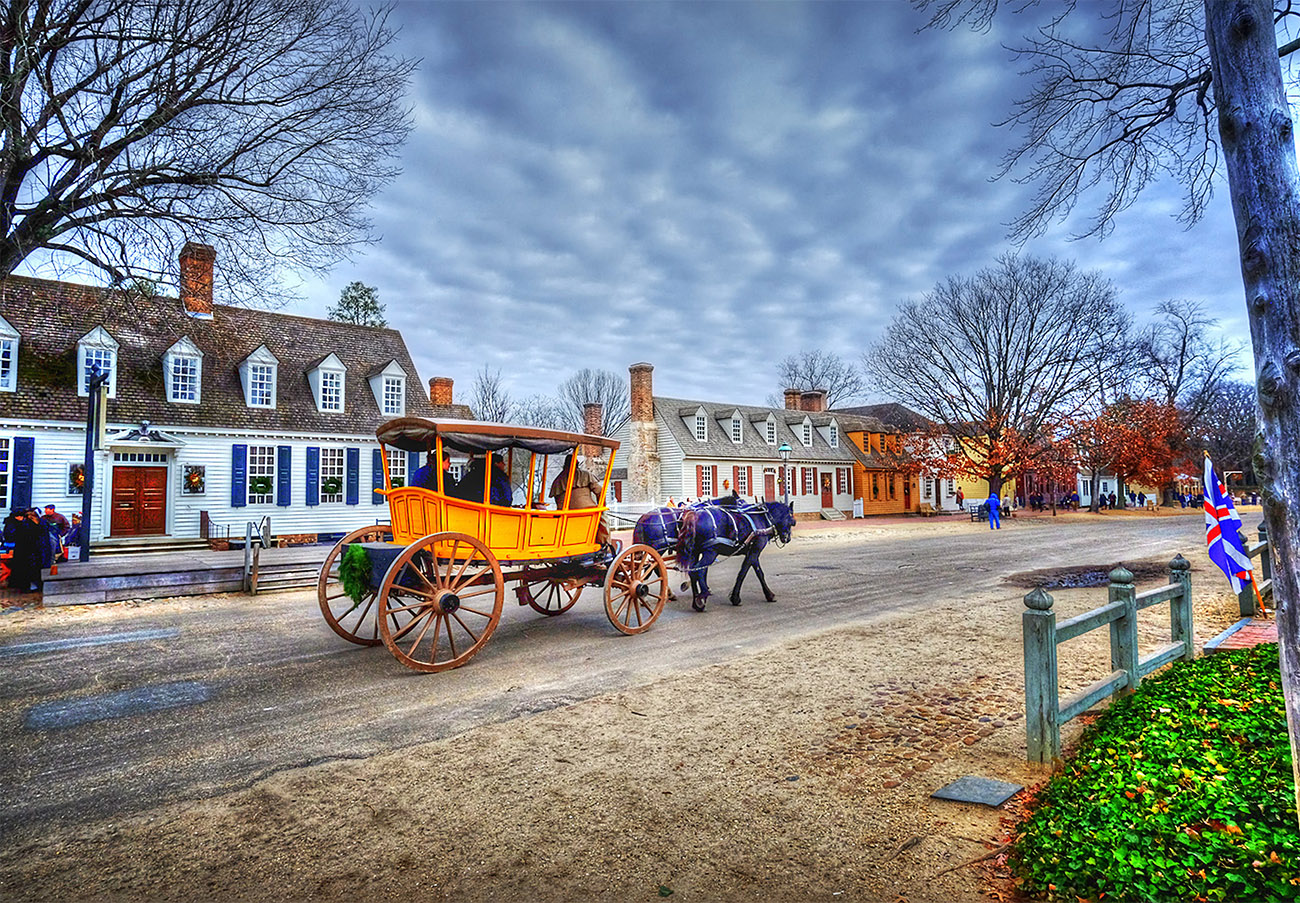
The star attraction is Colonial Williamsburg, the largest living history museum in the world, covering hundreds of restored or reconstructed colonial buildings. Inside the historic district you’ll find:
- Blacksmiths hammering iron tools
- Wig makers crafting powdered hairpieces
- Horse-drawn carriages rumbling down Duke of Gloucester Street
- Actors portraying historical figures
The historic area includes 89 original 18th-century buildings, with hundreds more reconstructed based on historical records.
Insider tips
- Many people don’t realize you can wander much of Colonial Williamsburg for free. You only need tickets to enter certain buildings and interactive exhibits.
- Visit at dusk when lanterns glow and the crowds thin. Suddenly the entire town feels like you time-traveled.
Jamestown
Just 15 minutes away is Jamestown Settlement, where America’s earliest English colonists struggled to survive. The site features:
- Re-created colonial ships
- A replica 1600s fort
- Native Powhatan village reconstructions
- Museums and immersive exhibits explaining early colonial life
Insider tips
- Drive the Colonial Parkway between Jamestown and Williamsburg for beautiful river views and almost no traffic.
The Secret Outdoor Side of Williamsburg
Most people come for history. Few realize the nature here is incredible.
Jamestown Beach
Locals escape to Jamestown Beach Event Park, a quiet sandy stretch along the James River. It’s perfect for:
- kayaking
- paddleboarding
- sunset picnics
- avoiding the ocean crowds
Capital Trail
The Virginia Capital Trail is a 52-mile paved biking trail connecting Williamsburg to Richmond. Expect:
- forests
- river views
- wineries
- historic sites
Greensprings Interpretive Trail
One of Williamsburg’s quietest nature spots, this wooded trail winds through wetlands, bird habitats, and scenic boardwalks. It’s peaceful, uncrowded, and very photogenic.
Insider tips
- Bike the Williamsburg to Jamestown section for the best scenery. Rent bikes from Spoke n Art and enjoy a cold drink and delicious snack on the patio. Peddle toward Charles City for stop at Cul’s Courthouse Grille for lunch.
Busch Gardens and Water Country USA
History not your thing? Williamsburg also has some of the best theme parks in the country.
Busch Gardens Williamsburg
This European-themed park features:
- world-class roller coasters
- international villages
- seasonal festivals
It offers more than 50 rides and attractions, along with shows and events throughout the year.
Water Country USA
Three miles away is Virginia’s largest water park, packed with slides, wave pools, and lazy rivers.
Insider tips
- Look for combo passes that include Colonial Williamsburg, Busch Gardens, and Water Country USA for multiple days of admission. It’s one of the best travel deals in Virginia.
Where to Eat
Williamsburg’s food scene quietly punches above its weight.
Must-try spots
The Cheese Shop (Merchant Square)
Legendary sandwiches and gourmet cheeses.
Amber Ox Public House
Farm-to-table Southern cuisine with craft beer.
Craft 31
Fun and casual atmosphere with a great beer selection.
Le Yaca
Upscale French dining for date night.
Sal’s by Victor
Longtime local’s favorite for pizza, subs, and authentic Italian fare.
Charlies Airport Restaurant
Don’t miss this fun little hidden spot where you can grab a burger while Cessnas take off and land.
Breweries, Wine, and Colonial Spirits
Yes, Williamsburg is also a surprisingly great drinking town.
Williamsburg Winery
Virginia’s largest winery offers:
- vineyard tours
- tastings
- a romantic countryside setting
Local breweries
The region has exploded with craft beer in recent years. Favorites include:
- Alewerks Brewing Company
- Virginia Beer Company
- Precarious Beer Project
Where to Stay
Williamsburg has everything from luxury historic hotels to surprisingly affordable resorts.
Budget-friendly
Patriot’s Inn
A quiet timeshare-style resort with spacious suites and frequent discount packages.
Greensprings Vacation Resort
Great for families with pools, kitchens, and low off-season rates.
Luxury option
The Williamsburg Inn offers colonial elegance and golf access.
Getting Around Williamsburg
One of Williamsburg’s biggest perks: it’s compact and safe. Getting around is simple:
- Walk Colonial Williamsburg and Merchant Square
- Bike the Capital Trail
- Drive the Colonial Parkway for scenic routes
The College of William & Mary
Founded in 1693, William & Mary is the second-oldest college in the United States. The campus is gorgeous—brick paths, ancient trees, and historic buildings.
Fun fact:
Thomas Jefferson studied here.
Hidden Williamsburg Secrets Most Visitors Miss
1. The Merchants Square Soundtrack
Most tourists treat Merchants Square as a tactical pitstop for a souvenir magnet and a restroom. Big mistake. This is the town’s living room. Depending on the season, you’ll stumble into everything from impromptu jazz quartets to open-air film screenings. It’s the perfect place to grab a bench, a craft beer from Virginia Beer Co., and realize that “colonial” doesn’t always have to mean “quiet.”
2. After-Hours Chills: The Lantern Lore
Once the sun sets and the reenactors go home, the mood shifts from “educational” to “actually unsettling.” Skip the kitschy, over-produced ghost tours and find the ones led by lantern light. There is something profoundly different about hearing 18th-century ghost stories while standing in the literal shadows of the original gaol. It’s atmospheric, slightly macabre, and the only time it’s socially acceptable to be afraid of the dark as an adult.
3. The “Secret” Side Streets
Duke of Gloucester Street (or “DoG Street” to the locals) is the main stage, but the real soul of the town is one block over. Slip behind the Governor’s Palace or wander the residential side streets. You’ll find tucked-away colonial gardens, sleeping cats on porch swings, and the kind of hushed, moss-covered tranquility that makes you want to delete all your social media and start writing a novel by candlelight.
4. Saturday Morning Fever: The Farmers Market
This isn’t just a place to buy a head of lettuce; it’s a high-stakes social arena. The Saturday Farmers Market is where performance art meets produce. It’s a tactical operation involving artisan sourdough, heirloom tomatoes that look like Renaissance paintings, and a sea of Golden Retrievers in bandanas. Arrive early for the “good” strawberries; stay late for the people-watching. It’s peak Williamsburg: historic, slightly chaotic, and the only place where “farm-to-table” feels like a lifestyle choice rather than a marketing slogan.
5. The Colonial Parkway: The Ultimate “Slow Drive”
Forget the highway. If you want the cinematic version of Virginia, take the Colonial Parkway between Jamestown, Williamsburg, and Yorktown. It’s a paved-over time machine with no stoplights, no commercial signs, and zero stress. It’s a 23-mile stretch of tunnel-like trees and river views that reminds you why people fell in love with this peninsula in the first place. Think of it as the “Historic Triangle” loop, but with a lot more “Main Character” energy.
Quick Williamsburg, Virginia Travel Tips
- Best time to visit: Spring and fall.
- Avoid crowds: Go early morning to Colonial Williamsburg.
- Best family combo: History in the morning, Busch Gardens in the afternoon.
- Best hidden gem: Jamestown Beach
- WilliamsburgVisitor.com: Find food trucks, live music, a calendar of events, a ton of great travel tips.
Williamsburg and Jamestown Frequently Asked Questions
Why is Williamsburg so famous?
Williamsburg became famous because it preserves one of the most complete colonial towns in America. The town played a major role in the American Revolution, hosting political debates and speeches from figures like Patrick Henry and Thomas Jefferson. Today, Colonial Williamsburg is the largest living history museum in the world, attracting millions of visitors each year.
Is Williamsburg, Virginia, worth visiting?
Absolutely—unless you hate fun. It’s a rare hybrid of a high-stakes history lesson, a world-class theme park destination (Busch Gardens), and a surprisingly chic foodie scene. You can spend your morning debating 18th-century politics with a guy in a powdered wig and your afternoon hitting 70 mph on a hypercoaster.
What is the difference between Jamestown and Williamsburg?
Think of them as two different chapters of the same gritty survival story. Jamestown (founded 1607) is the “rough draft”—it’s where the first settlers struggled, built a fort, and dealt with the harsh reality of the New World. Williamsburg(the capital starting in 1699) is the “final edit”—it represents the height of colonial power, politics, and refined society a century later.
Wait, there are two Jamestowns? Which one do I go to?
This trips up everyone. There are two distinct sites:
Historic Jamestowne: The actual, literal dirt where the original 1607 fort stood. Go here for live archaeological digs, the original church tower, and a “National Park” vibe.
Jamestown Settlement: A world-class living history museum with full-scale replicas of the three ships, a re-created fort, and a Powhatan town. Go here to climb on things and see history in 4D.
Do I need a ticket just to walk around Colonial Williamsburg?
Yes and no. You can walk the streets, browse Merchants Square, and admire the gardens for free. However, if you want to go inside the historic trade shops, the Governor’s Palace, or the Capitol—or if you want to ride the carriages—you need a ticket. Pro tip: Look for the flags; if a building has a flag out front, you need a pass to enter.
How many days do I need for the “Historic Triangle”?
If you’re a “speed-runner,” you can do the highlights in two days (one for Williamsburg, one for Jamestown/Yorktown). If you’re a history nerd or have kids in tow, aim for three to four days. This gives you enough time to actually talk to the blacksmiths, do a ghost tour, and not feel like you’re on a forced march.
Is the area pet-friendly?
Williamsburg is surprisingly obsessed with dogs. While they aren’t allowed inside the historic buildings or museums, they are welcome on the streets of the Historic Area and in many outdoor dining spots like Chowning’s Tavern Garden. Just keep them leashed, or the ghost of a colonial constable might judge you.
What is the “Historic Triangle” ticket?
It’s the “all-access pass” of Virginia. It covers admission to Colonial Williamsburg, Jamestown Settlement, Historic Jamestowne, Yorktown Battlefield, and the American Revolution Museum at Yorktown. It’s valid for seven consecutive days, which is perfect if you want to see everything without the stress of buying individual tickets at every stop.