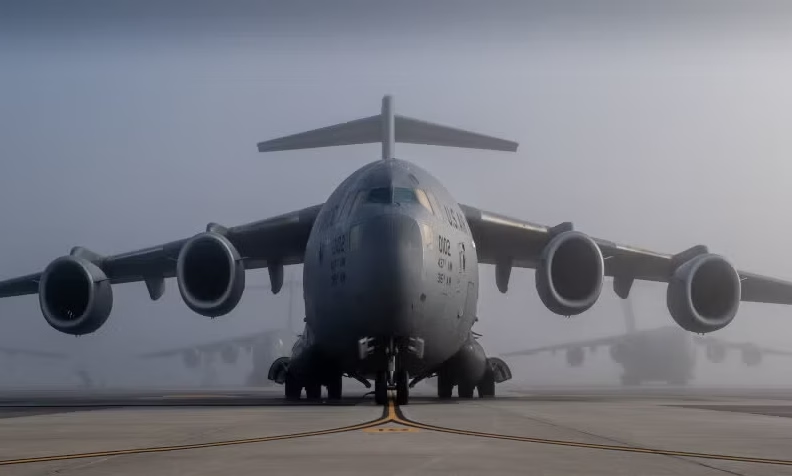

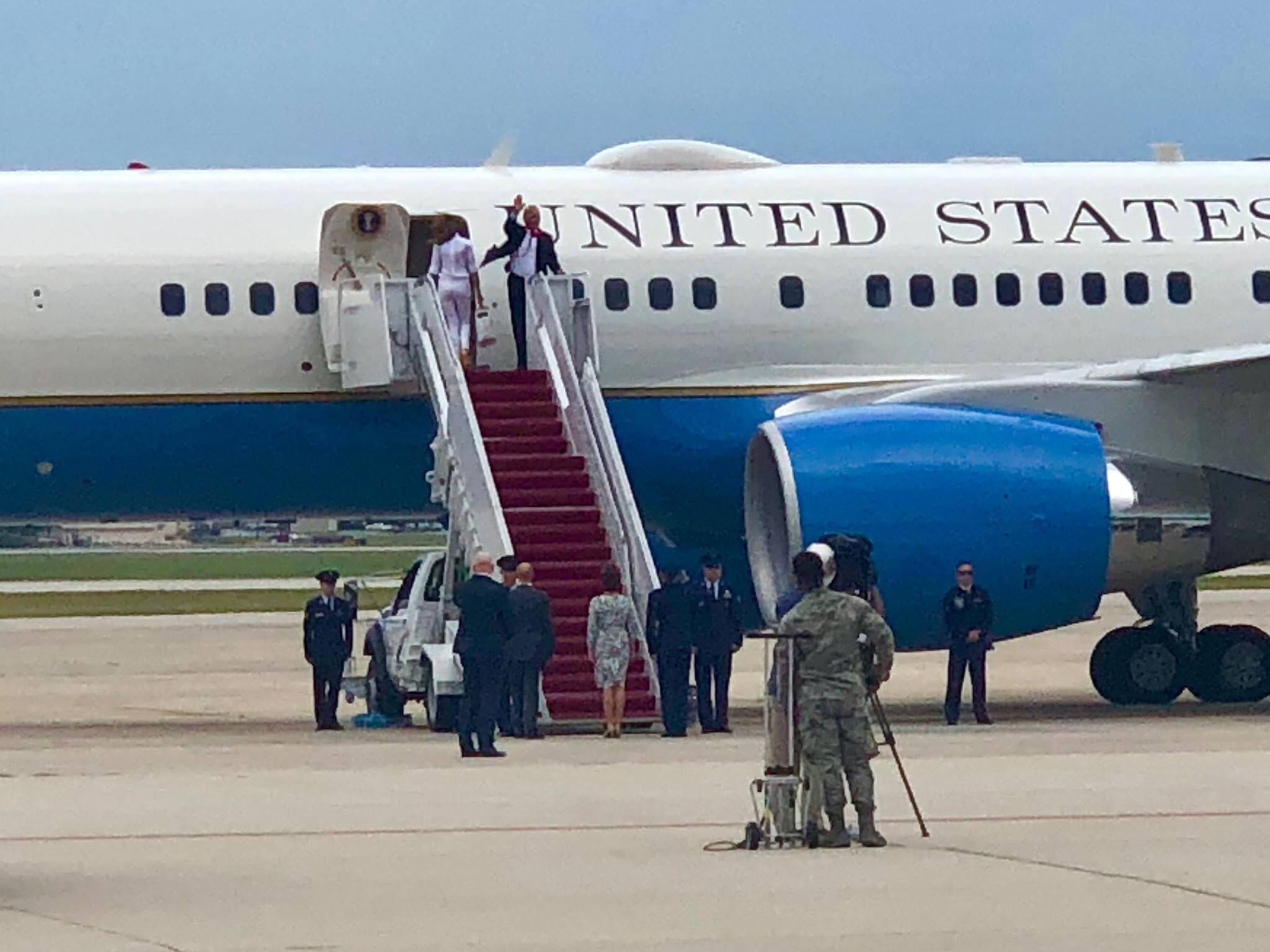
If you’ve only flown commercial airlines, boarding a military aircraft or military cargo plane for the first time feels a little like walking into a different universe. There’s no gate agents calling priority groups. No overhead bins fighting for your carry-on. Instead, there’s a flight line, a giant gray aircraft, and a crew chief waving you toward the stairs.
Welcome to Space-Available travel, where retirees and military families sometimes ride along on aircraft designed to move tanks, troops, and cargo across the globe.
Our family of five has hopped flights everywhere from Germany to Hawaii to coast-to-coast missions across the U.S. on everything from cargo giants to Navy passenger jets. Each aircraft has its own personality — and some are far more comfortable than you’d expect. Here’s what it’s actually like inside the aircraft most Space-A travelers eventually encounter.
The Patriot Express: The “Commercial Airline” of Space-A
Let’s start with the odd one out. The Patriot Express, a military aircraft operated under the Air Mobility Command system, is essentially a chartered commercial aircraft used for troop movement overseas. It’s commonly called the rotator by frequent Space-A travelers.
Inside, everything feels familiar. Rows of airline seats. Normal overhead bins. Standard lavatories. The main difference is that the passengers are usually service members moving to overseas assignments along with their families.
Space-A travelers can sometimes grab leftover seats once mission passengers are accommodated. Unlike cargo aircraft, Patriot Express flights often charge a small head tax fee (usually around $20–$35). If cargo aircraft feel like an adventure… Patriot Express feels like Delta Airlines wearing camouflage.
The C-17 Globemaster: The Workhorse of Space-A Adventures
If Space-A travel had a mascot, it would probably be the C-17 Globemaster III. It’s a massive military cargo plane used constantly for global missions, which means retirees often see it appear on passenger terminal schedules. Inside, the experience depends entirely on how the aircraft is configured. Most of the time, passengers sit in webbed jump seats that run along the walls of the cargo bay, facing the center of the aircraft. In the middle you’ll usually see cargo pallets strapped to the floor — or sometimes nothing but a pile of luggage tied down with cargo netting. Once the aircraft reaches cruising altitude and the crew says it’s okay, passengers often spread out on the cargo floor or across empty seats to sleep.


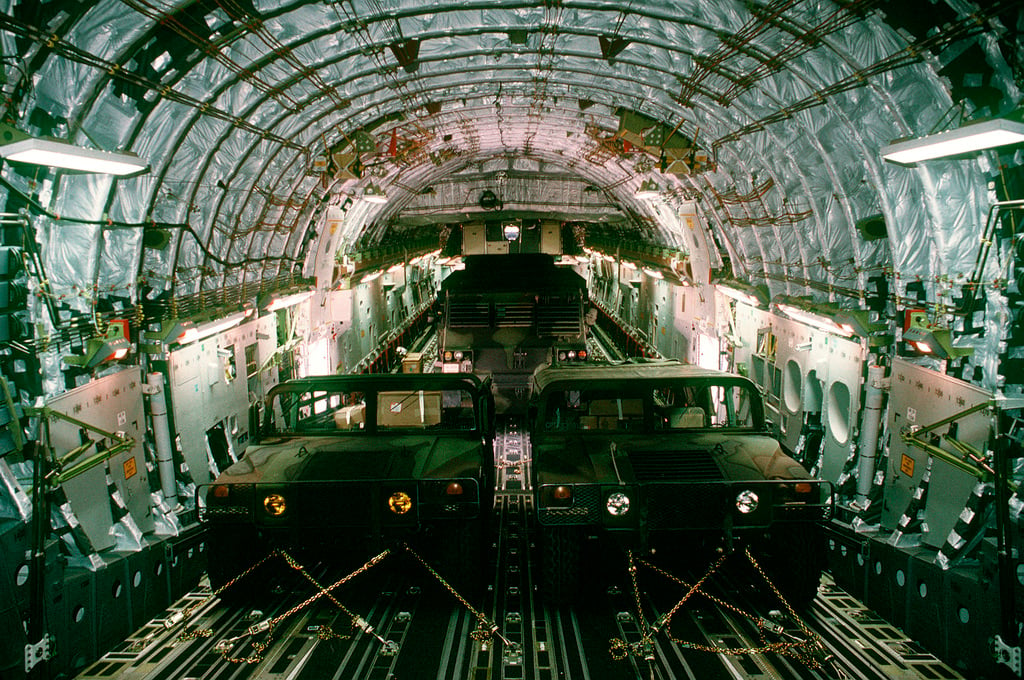
Bring a small sleeping pad or inflatable mat and suddenly the giant metal aircraft becomes surprisingly comfortable. Two other things you’ll notice immediately on a C-17: It’s loud – and it’s cold. Earplugs are usually handed out by the crew, but experienced travelers bring noise-canceling headphones, blankets, and layers. It feels less like flying on an airline and more like camping in the sky.
The C-5 Galaxy: The Giant of the Air Force
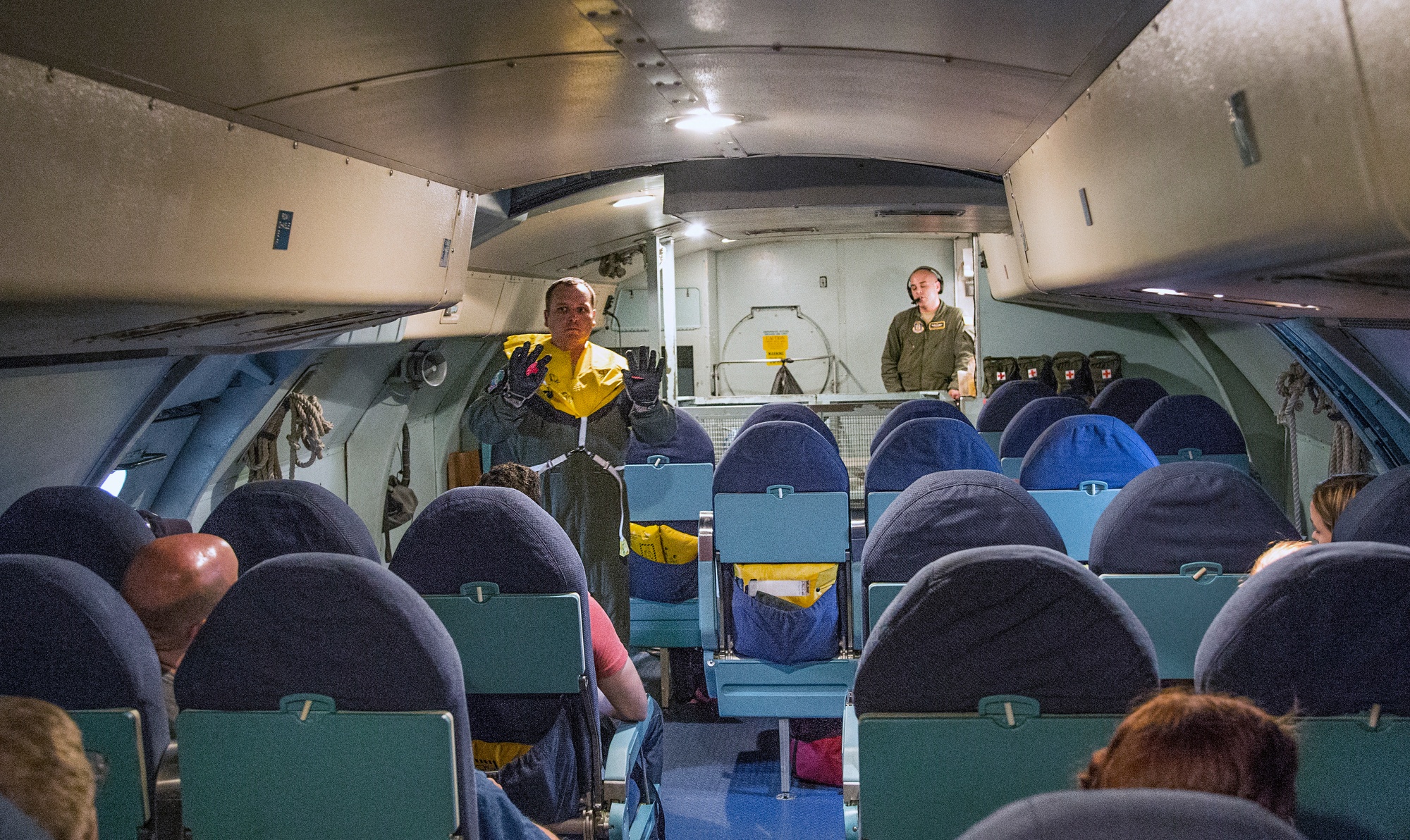

The C-5 Galaxy is the largest military aircraft in the Air Force fleet. Seeing one up close feels like standing next to a flying warehouse. Space-A passengers sit in a dedicated seating area above the cargo deck, arranged in rows similar to a commercial aircraft — except the seats face the rear of the plane. The good news: the legroom is fantastic.
On these types of military cargo planes, there are no overhead bins, so your carry-on goes under the seat. Bathrooms resemble airline lavatories, though sinks often rely on antiseptic wipes instead of running water. The cold-zone physics inside the aircraft are strangely predictable too. Seats near the lavatory tend to stay warm, while the rows farther away can feel like a refrigerator. Boarding can also be memorable. Sometimes passengers climb a rolling staircase from the flight line. Other times you’re climbing a steep internal ladder between decks while holding your backpack.
It’s one of those moments where you realize: This is not normal air travel and that’s so freakin’ cool!
The C-130 Hercules: Small, Loud, and Surprisingly Tough

The C-130 Hercules is the scrappy cousin of the cargo fleet. It’s a propeller aircraft rather than a jet, which means three things: It’s slower, louder, and the ride can be bumpier. Inside, the layout resembles the C-17 but in a much smaller cargo bay. Passengers sit along the sides in webbed jump seats, and if the aircraft isn’t full, people often stretch out on the cargo floor.
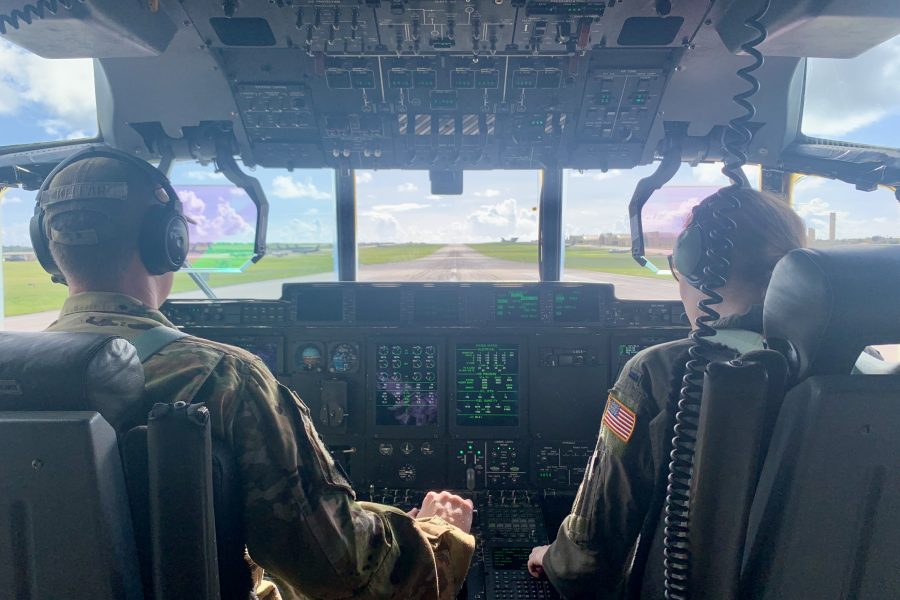

The bathroom situation is… memorable. Many C-130s military aircraft carry what crews affectionately call the “honey bucket” — essentially a portable toilet behind a privacy curtain. It’s functional. Just don’t expect luxury. Flights on C-130s are usually regional hops between bases, though occasionally they show up on longer routes.
The KC-135: The Tanker That Sometimes Carries Travelers


The KC-135 Stratotanker has a very different primary mission. It’s built to refuel other military aircraft in flight. Yet occasionally Space-A passengers ride along. Seating again runs along the sides of the aircraft, with cargo occupying much of the middle. The front floor section can look tempting for sleeping — until you realize fuel tanks sit directly beneath it, making the metal surface extremely cold. Passengers often end up stretching across multiple seats instead.
One of the coolest possibilities on this aircraft is the boom pod, where the boom operator guides the refueling arm during mid-air fuel transfers. If the crew is feeling generous and mission rules allow it, some passengers get to peek inside. Not many airline passengers can say they watched air-to-air refueling happen beneath them.
The C-40A: When Space-A Feels Like First Class
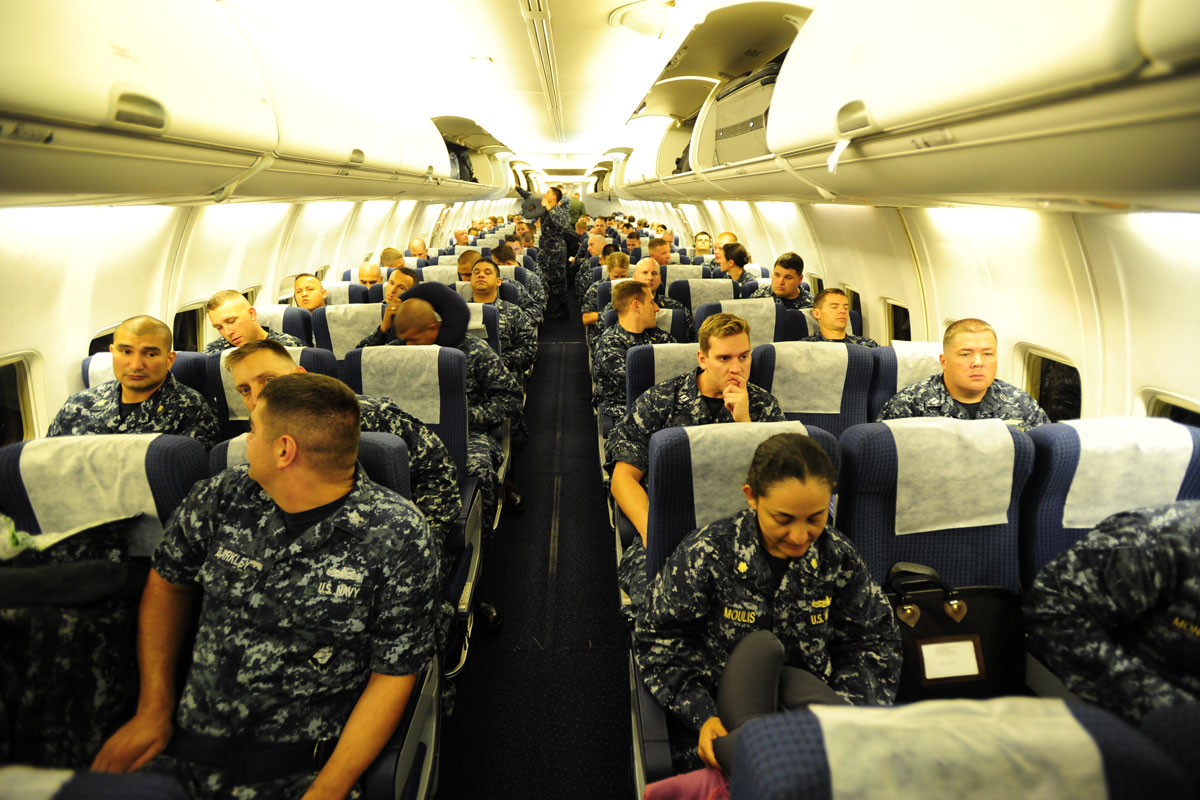

Occasionally, Space-A travelers hit the jackpot with the C-40A Clipper. This military aircraft is essentially a military version of a Boeing 737 used by the Navy. Inside you’ll find: real airline seats, overhead bins, normal bathrooms, and comfortable legroom. Compared to cargo aircraft, it feels downright luxurious. Your best chance of finding one is traveling between Navy installations, especially overseas.
The Tiny VIP Aircraft You Should Always Say Yes To
Sometimes schedules show military aircraft like:
- C-12
- C-21
- C-26
- C-40B or C-40C
These are often small passenger or VIP transport aircraft. If you see seats released on one of these missions, grab them. They’re comfortable, quiet, and feel much closer to a private charter flight than a cargo mission. The only catch is baggage limits, which can be tighter due to aircraft size and fuel requirements.
The Real Secret to Enjoying Military Aircraft and Military Cargo Planes
The difference between a miserable military cargo trip and a surprisingly comfortable one often comes down to what you pack, especially if you’re traveling with kids.
Experienced Space-A travelers know the secrets:
• layered clothing (temperatures fluctuate wildly)
• ear protection or noise-canceling headphones
• snacks and water bottles
• hand wipes
• a sleeping pad or inflatable mat
• blanket or sleeping bag and a small pillow (or, if you’re like us, an extra sweatshirt or jacket that can be balled up like a pillow)
Plus, don’t forget all the usual travel necessities like books, iPads, chargers, and eye masks. Think of it less like airline travel and more like preparing for a very unusual camping trip that happens to take place at 30,000 feet.
Why Military Cargo Aircraft Are Actually the Best Part of Space-A Travel
Many travelers initially hope for Patriot Express flights because they resemble commercial airlines. But after flying a few cargo missions, something funny happens. You start hoping for the gray tails. Because once you’ve watched a giant ramp close behind you… Or slept on the floor of a C-17 halfway across the Pacific… Or listened to a crew chief explain how cargo pallets are balanced before takeoff…
You realize this isn’t just transportation.
It’s a front-row seat to the machinery of the U.S. military moving around the world.
And once you’ve experienced that, regular airline travel feels a little… ordinary.
The appearance of any Department of Defense entities, images, or testimonies, on this or subsequent pages or links to pages does not convey or imply that the Department of Defense directly or indirectly endorses any product or service provided, or to be provided, by SpaceATravels.com, its successors, assignees, or licensees.
The appearance of hyperlinks to Department of Defense commands, units, and or activities, does not constitute the endorsement by the Department of Defense, the U.S. Army, the U.S. Navy, the U.S. Air Force, the U.S. Marine Corps, etc. of this website or the information, products or services contained therein. The Department of Defense, the U.S. Army, the U.S. Navy, the U.S. Air Force, the U.S. Marine Corps, etc. does not exercise any editorial control over the information you may find on this website or the provided hyperlinks. Such information and links are provided consistent with the stated purpose of the SpaceATravels.com website.