
You’re halfway through your third soft-serve cone of the day when suddenly the captain makes that announcement:
“Ladies and gentlemen, the ship will be altering course due to a medical emergency.”
Cruise ship medical evacuations, aka: medevacs, are dramatic moments at sea. They involve everything from helicopter rescues in the middle of the Atlantic to high-speed boats racing to a tropical island dock. And yes, passengers see them more often than cruise lines like to admit.
Here’s what actually happens when someone gets seriously sick at sea, and why a cruise ship is both a floating resort and a very small hospital.
The Floating ER: What Cruise Ship Medical Centers Are Really Like
Despite what some people imagine, cruise ships do not have full hospitals onboard. They have medical centers that function more like urgent care clinics or small emergency departments. Many facilities follow guidelines from the American College of Emergency Physicians to ensure ships can stabilize patients at sea.
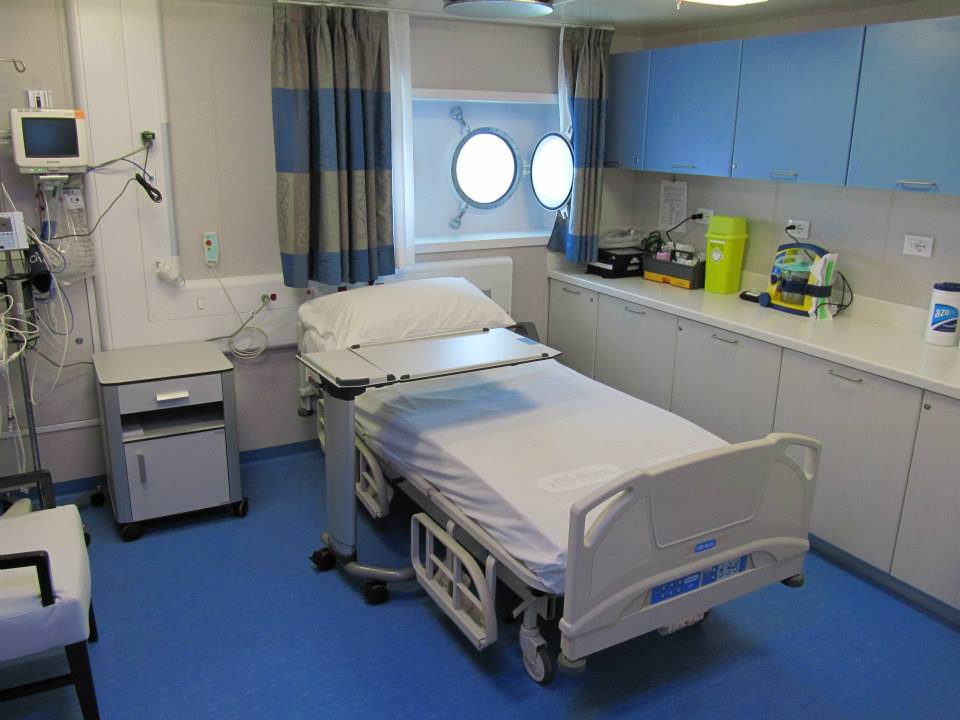
Ship medical facilities often include:
Exam rooms, A pharmacy, Lab testing equipment, Cardiac monitors and defibrillators, X-ray machines, Oxygen and IV treatment, Isolation rooms for contagious illnesses
Who Are the Doctors at Sea?
Medical teams onboard cruise ships are small but highly trained. Typical staffing includes:
- 1–2 physicians
- 2–6 registered nurses
- Sometimes paramedics or nurse practitioners
- Occasionally medical assistants or public health officers
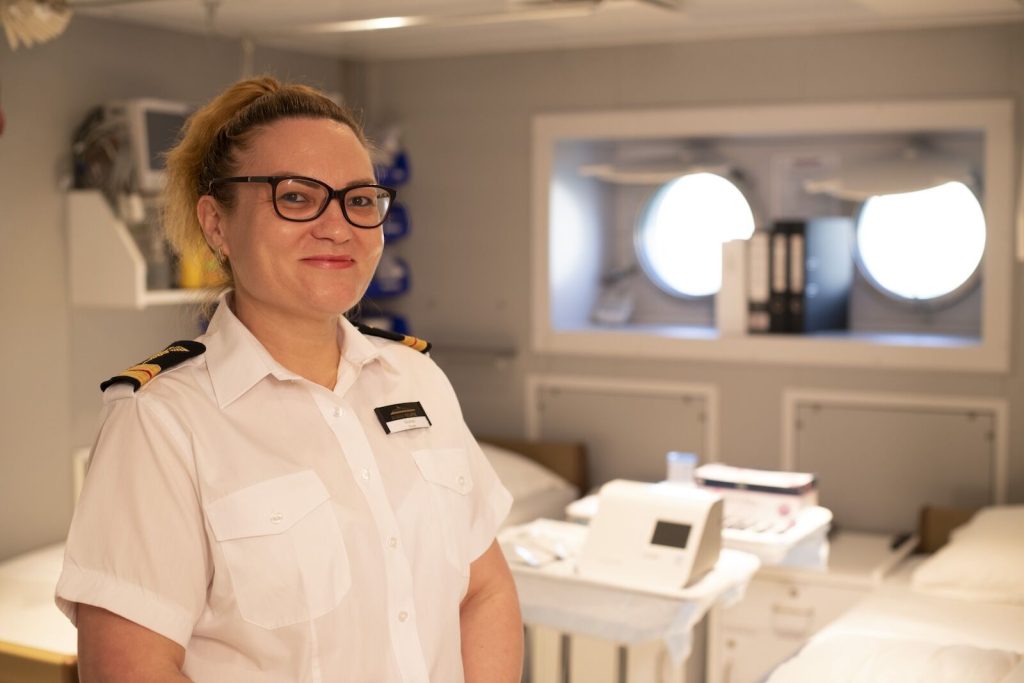
Doctors must usually have at least three years of emergency medicine experience before working at sea. they’re on call 24 hours a day, because the human body refuses to schedule its emergencies around dinner seating.
What Cruise Ship Doctors Can Treat
Most cruise ship medical centers can handle the same issues you’d visit urgent care for on land. Common cases include:
- Norovirus and stomach bugs
- Dehydration
- Broken bones and sprains
- Minor surgeries and stitches
- Allergic reactions
- Asthma attacks
- Heart rhythm monitoring
- Flu and respiratory infections
Ship doctors can also stabilize serious conditions like:
- Heart attacks
- Stroke symptoms
- Severe trauma
- Pregnancy complications
What They Can’t Treat
At some point, the ocean becomes the problem. Cruise ships cannot perform many advanced procedures like:
- Major surgery
- Intensive care for extended periods
- Complex cardiac procedures
- Neonatal care
- Advanced imaging like CT or MRI
If a patient needs those things, the ship has two choices: Turn the ship around toward the nearest port or Call for a medevac
The Medevac: When the Coast Guard Shows Up
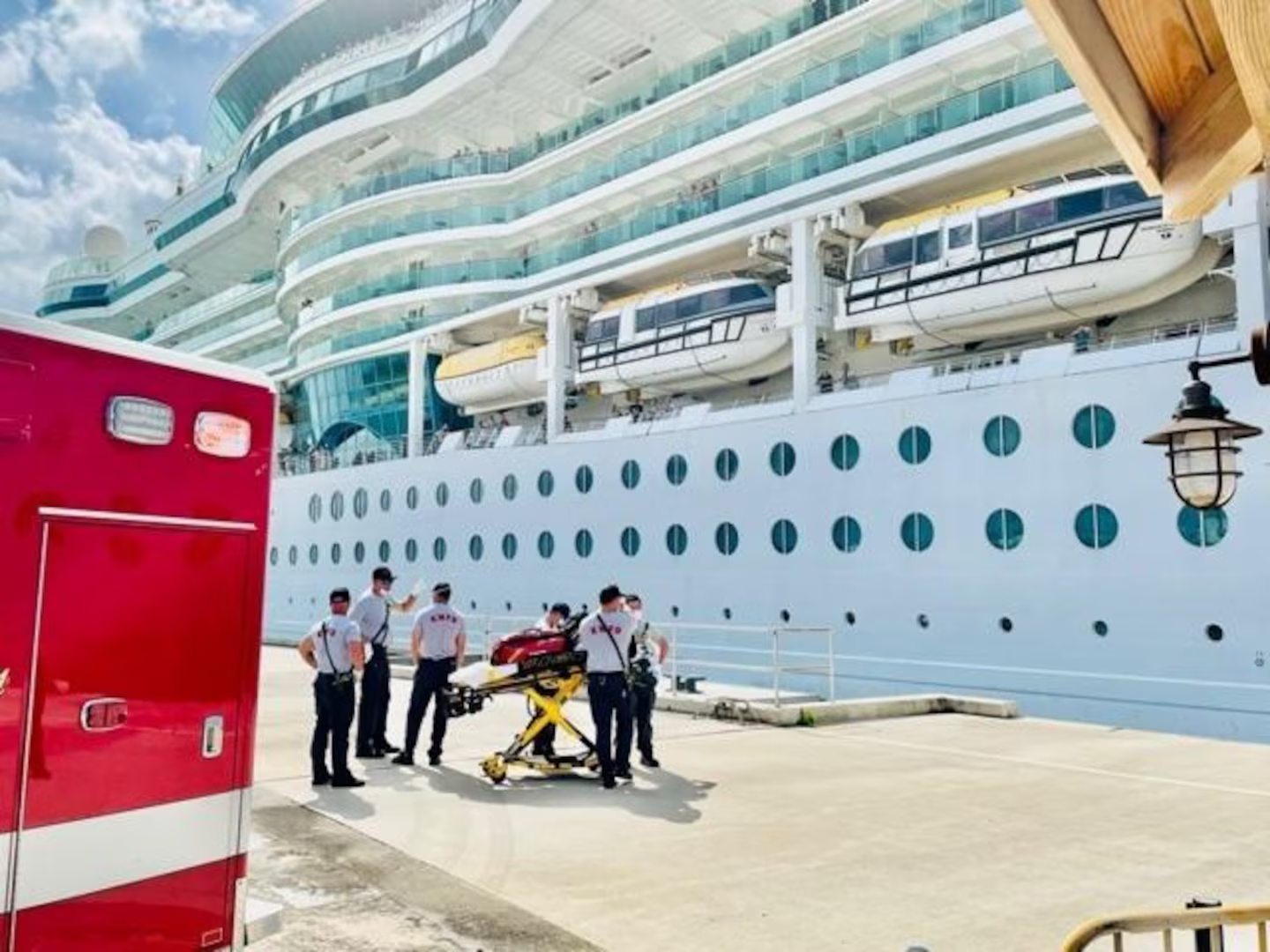
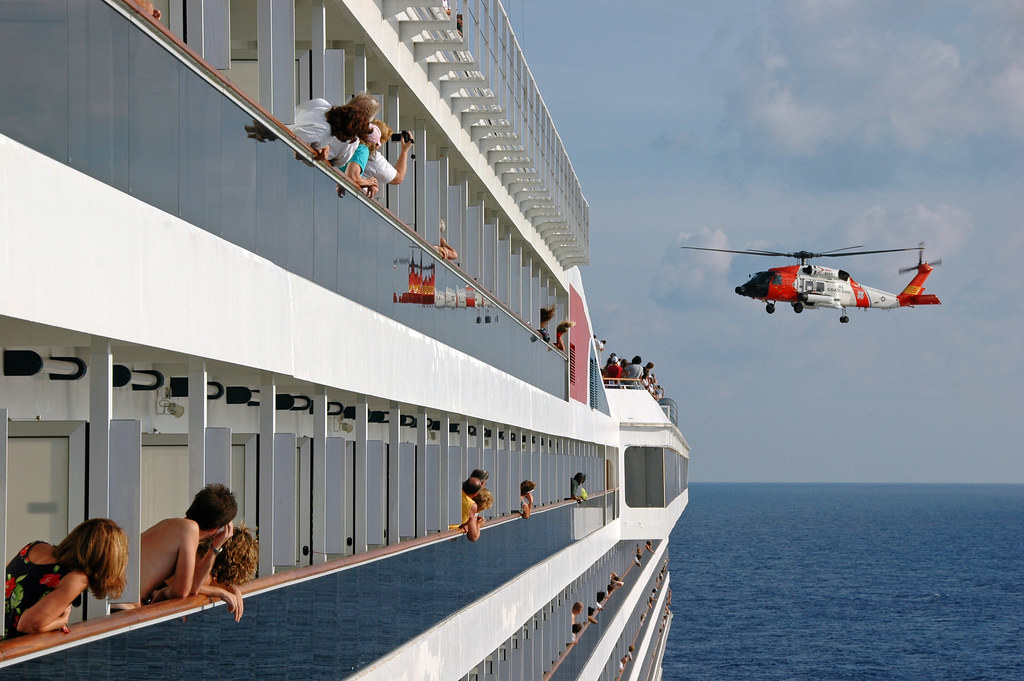
When a medical emergency exceeds what the ship can handle, the captain calls the nearest rescue authority—often the U.S. Coast Guard. The result can look like something straight out of a movie. Typical medevac scenarios include:
🚁 Helicopter Airlift
The most dramatic option. A rescue helicopter hovers above the ship while a rescue swimmer descends. The patient is placed in a basket or stretcher and hoisted up.
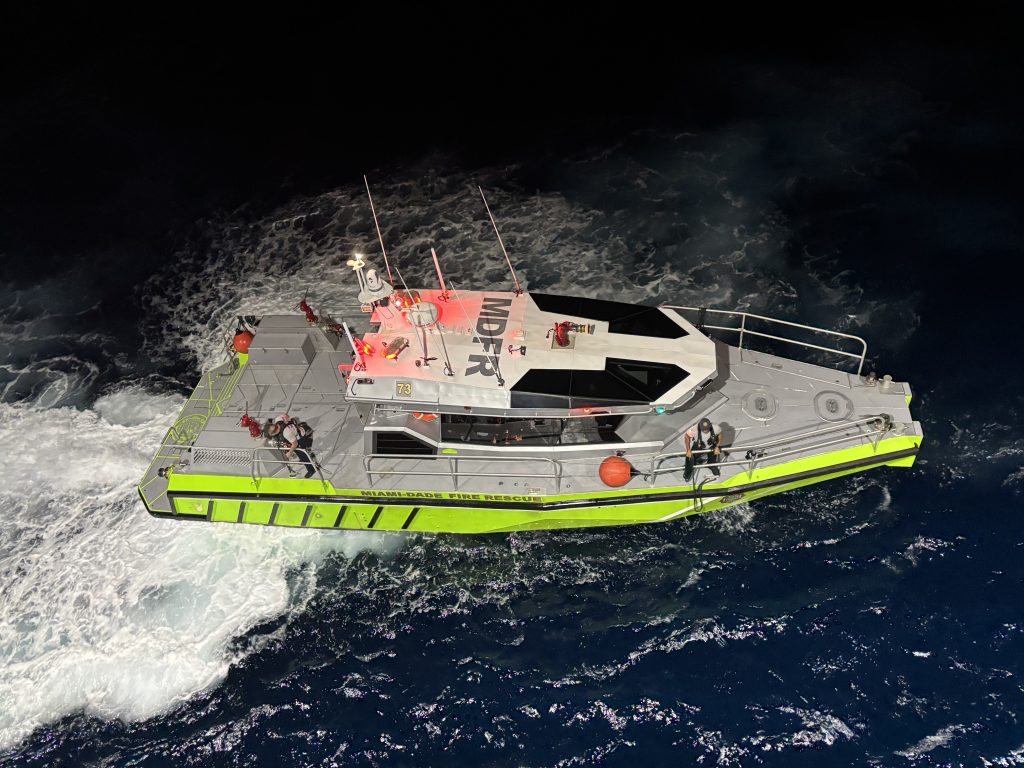
🚤 High-Speed Boat Transfer
If the ship is closer to land, rescue teams may send a fast response boat. Patients are transferred via:
- Tender boats
- Pilot boats
- Coast Guard vessels
🧭 Ship Turns Around
Sometimes the simplest option is the most frustrating. If a port is nearby, the captain may Reverse course, Increase speed toward a port, or even Skip a scheduled destination. Thousands of passengers miss their beach day… but someone gets life-saving care.
Heart-Pounding Mid-Sea Rescues You Have to See to Believe: Real Cruise Medevac Stories That Made Headlines
Cruise rescues happen far more often than people realize. Here are a few of the latest headlines:
Ruby Princess
In a masterclass of “borderless” teamwork, the U.S. Coast Guard and Royal Canadian Air Force turned the Ruby Princess into a high-stakes heli-pad 145 miles off the Washington coast. Proving that maritime emergencies don’t respect retirement ages or international lines, crews successfully plucked a 99-year-old man (esophageal obstruction) and a 52-year-old woman (cardiac arrest) from the deck in a synchronized aerial ballet. While it took a fleet of MH-65 Dolphins and Kingfisher aircraft to get them to specialized care in both the U.S. and BC, the mission served as a cinematic—and incredibly expensive—reminder that when the ship’s infirmary hits its limit, the “all-inclusive” experience suddenly includes a very literal lift from Uncle Sam and O Canada.
Holland America
When rough seas turned a Holland America staircase into a high-stakes slide off the coast of Vietnam, a 69-year-old German passenger found out the hard way that “all-inclusive” doesn’t usually include a ruptured spleen. Following a 2:00 a.m. tumble that shifted the itinerary from cocktails to critical care, the Westerdam went full throttle toward Da Nang to beat the clock on suspected internal bleeding. It took a coordinated midnight rendezvous with Vietnamese authorities to get him from buoy to bay, proving once again that while the cruise line provides the ship, it’s the VMRCC that provides the ultimate “shore excursion” directly to the ICU.
Pacific World
When the Pacific World found itself 886 miles from dry land with a passenger in septic shock, the U.S. Coast Guardproved that “out of sight” is never “out of reach.” What followed was a multi-day maritime chess match, with flight surgeons monitoring the 61-year-old’s vitals while the 857-foot vessel raced toward a reachable radius. Once within striking distance of Kauai, an MH-65 Dolphin helicopter swooped in for the ultimate long-range “check-out,” hoisting the patient for a direct flight to Honolulu. It’s a textbook reminder that while cruise ships are floating cities, sometimes the only amenity that matters is a Coast Guard pilot with a very long fuel tank.
Disney
It seems the “Happiest Place on Earth” is not exempt. In a plot twist no one at Disney Imagineering signed off on, a father-daughter duo turned a Deck 4 photo op into an unauthorized 50-foot high dive off the Disney Dream. After the five-year-old was reportedly perched on a railing for a picture and slipped, her father went full “superhero,” leaping into the Atlantic to tread water for 20 minutes until a rescue boat arrived. While the family initially eyed the ship’s design for blame, authorities pointed to a much simpler cause: gravity and a very bad spot for a selfie. Both survived, proving that while Disney provides the magic, physics still provides the consequences.
Celebrity Cruises
When the Celebrity Infinity decided to take an unscheduled “siesta” just outside the port of Piraeus, Greece, it proved that even luxury ships have their “Monday morning” moments. On February 15, 2026, a catastrophic malfunction in the electrical distribution panels left the ship powerless, steeringless, and—most tragically for the passengers—air-conditionless at 3:00 a.m. The ship was forced to trade its high-tech propulsion for a four-tugboat escort back to port, while guests were serenaded by the “Bravo, Bravo, Bravo” emergency code (maritime speak for “something is on fire or broken, please don’t panic”). While the 1,900 passengers on board got an early disembarkation and a front-row seat to a Greek towing operation, the real “loss of control” was felt by the guests of the following cruise, which was promptly canceled to allow for repairs. It’s a witty reminder that while Celebrity offers “The Retreat,” they didn’t exactly mean a retreat to a dark cabin with no plumbing and a tugboat for an engine.
Carnival
In a change of pace, Carnival Cruise Line recently reminded the world that they don’t just rescue passengers from their own buffet choices—sometimes they rescue people who aren’t even on the guest list. While the Carnival Paradise was en route to Jamaica in May 2025, the bridge team spotted a makeshift boat south of Cuba that was clearly failing its sea trials. Proving that “fun for all” includes stranded mariners, the crew launched a lifeboat to assist 15 refugees in distress. In a quirky twist of maritime hospitality, five of the group decided to trade their sinking raft for a cruise ship cabin, while the other ten took some “room service” (food, water, and fuel) and opted to continue their DIY voyage. It’s a witty reminder that while you’re debating which towel animal to make, your captain is essentially running a 180,000-ton volunteer Uber for the high seas.
Why Medevac Happens More Than You Think
Cruise ships carry thousands of people, many of them older travelers. A typical sailing might include 3,000–6,000 passengers and 1,000–2,000 crew. That’s basically a floating city with one small clinic. And statistically speaking, someone in that population will eventually need serious medical help. Especially on long voyages or transatlantic crossings.
What Passengers Usually Experience
If a medevac happens during your cruise, you’ll notice:
- A sudden change in course or speed
- Crew blocking parts of the deck
- Helicopter noise
- A brief captain’s announcement
Then… the ship resumes vacation mode.
Buffet lines reform.
Trivia resumes.
The pool band keeps playing Jimmy Buffett.
Cruise life moves fast.
FAQ: Cruise Ship Medical Emergencies
How common are medical evacuations on cruise ships?
They’re relatively rare but happen regularly across the industry due to the large number of passengers onboard.
Do cruise ships have hospitals?
No. Cruise ships have medical clinics, not full hospitals, designed to stabilize patients until they reach shore.
Are there doctors on cruise ships?
Yes. Most ships carry at least one doctor and two nurses, with larger ships carrying more medical staff.
Can a helicopter land on a cruise ship?
Usually no. Helicopters typically hover above the ship while rescuers lower a basket to lift the patient.
Who pays for a cruise ship medical evacuation?
The passenger or their travel insurance usually pays unless specific circumstances apply.
What happens if someone dies on a cruise?
Ships have procedures and facilities (including temporary morgues) until the vessel reaches port.
Can cruise ship doctors perform surgery?
They can perform minor procedures, but major surgery requires evacuation to a hospital on land.
Does travel insurance cover?
Most comprehensive plans do. Basic plans often do not. Always check for “emergency evacuation” coverage.
Do cruise ships charge for medical care?
Yes. Expect urgent‑care‑level pricing, billed to your onboard account. If not covered by insurance, it can exceed $50,000–$100,000 depending on distance and country.
Do cruise ships have morgues?
Yes. They’re small, discreet, and used more often than people realize
💡 Cruise truth:
Most people will never see a medevac.
But when it happens, the calm professionalism of the crew—and the sudden appearance of a Coast Guard helicopter—reminds everyone that even paradise sometimes needs an ER.